 Share


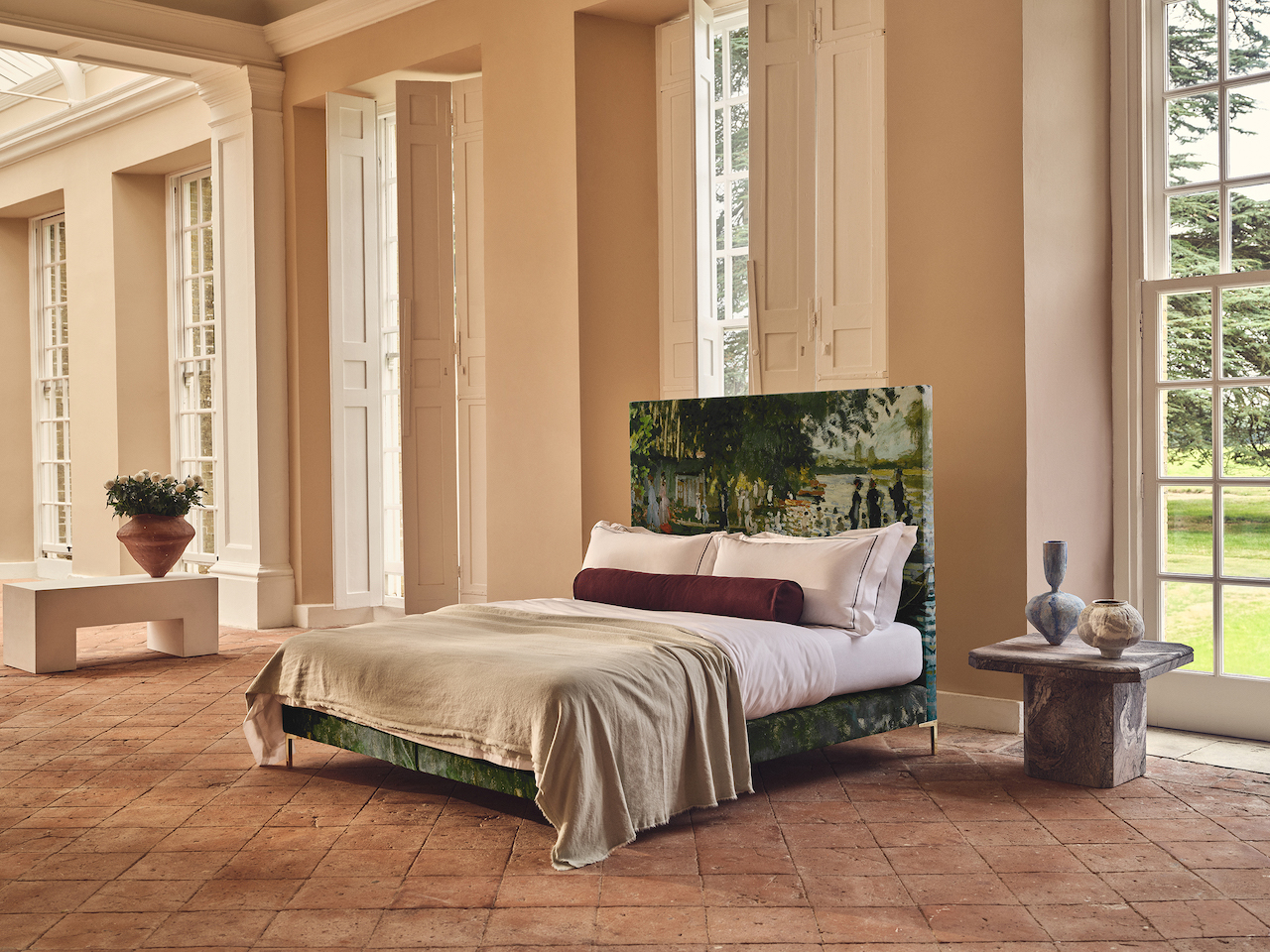
There are beds designed for comfort, and then there are those conceived as works of art. For London-based luxury bedmaker Savoir, the two are closely intertwined. With a heritage dating back more than a century, the company continues to champion traditional British craftsmanship, natural materials and bespoke design, creating beds that are as individual as the people who sleep in them.
Savoir's story began in 1905 at London's legendary Savoy Hotel, where the owners sought to create an exceptional sleeping experience for their distinguished guests. This led to the prestigious upholsterer James Edwards Ltd being commissioned to create The Savoy Bed. This luxurious model, slumbered on by the rich and famous through the decades is still made today as the Savoir No2. These days, Savoir continues to produce its beds by hand in England and Wales, preserving many of the techniques established more than 120 years ago.
Crafted by hand
Unlike mass-produced mattresses, every Savoir bed is individually commissioned and made to order. The company produces fewer than 1,000 beds annually, with each requiring considerable time, skill and attention to detail. A single craftsperson often oversees the construction of the bed's sleeping components, signing the finished piece as a mark of personal workmanship.
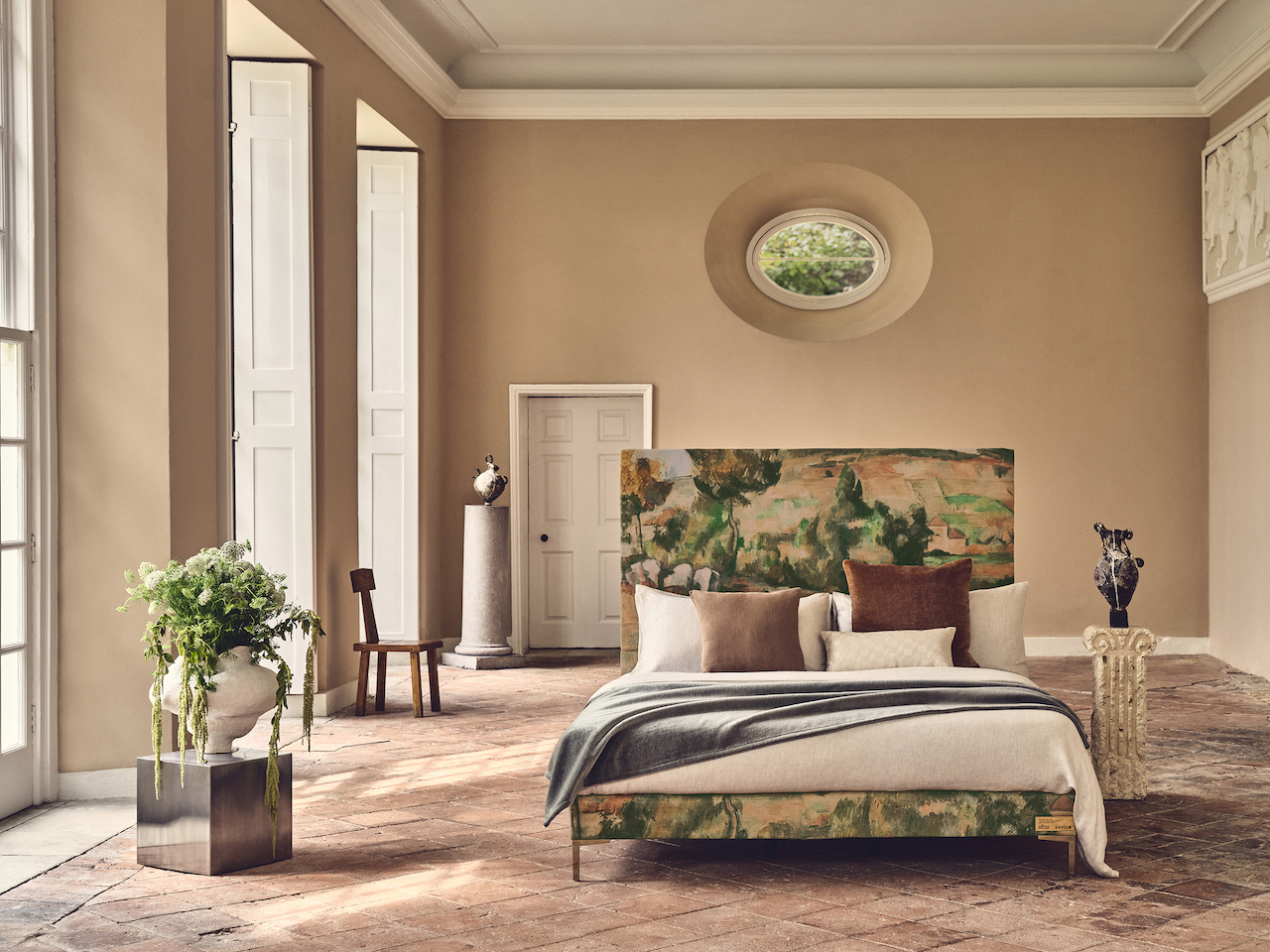 ‘Harlech’, No4 Upholstered in a specially printed cotton-linen fabric with Hillside in Provence (detail), about 1890-2 by Paul Cézanne, 1839-1906 © The National Gallery.
The company's flagship Nº1, known as The One, takes at least 120 hours to handcraft, while the Nº2, The Icon, is based on the original Savoy bed and requires more than 80 hours of skilled labour. Other models include the Nº3 The Superior, Nº4 The New Standard and Nº5 The Savvy, offering different levels of construction and comfort.
Savoir's beds is a carefully engineered sleeping system comprising a mattress, topper and box spring base. The mattresses incorporate individually pocketed springs, while the bases feature traditional hourglass springs, hand-tied to provide support and durability.
Equally important are the natural fillings, including curled horsetail, lambswool, cashmere and cotton. Horsetail is particularly valued for its elasticity, breathability and ability to retain its shape. Wool and other natural fibres help regulate temperature and moisture. For those seeking alternatives to animal-derived fillings, Savoir also offers plant-based options.
A personalised approach
Beyond the internal construction, Savoir's bespoke philosophy extends to virtually every aspect of the bed's appearance and dimensions. Clients can specify mattress firmness, including split-tension configurations that accommodate different sleeping preferences for couples. Dimensions can also be tailored to suit unusual spaces, from private residences to superyachts.
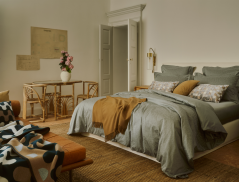
The design possibilities are equally extensive. Headboards and bed frames can be upholstered in sumptuous velvets, refined linens, wool and textured fabrics, including bouclé. Clients can choose from existing designs or collaborate with Savoir's specialists to create a more individual statement, incorporating specific colours, materials, silhouettes and decorative finishes.
Rather than treating the bed as an isolated piece of furniture, this approach allows it to become an integral part of the interior scheme, balancing aesthetics with comfort and function.
Where fine art meets furniture design
Perhaps the most compelling expression of Savoir's bespoke capabilities is its collaboration with London's National Gallery, which allows clients to incorporate reproductions of paintings from the museum's collection into their bed designs. Through specialist upholstery techniques, these celebrated artworks are transformed into striking headboards and bed frames.
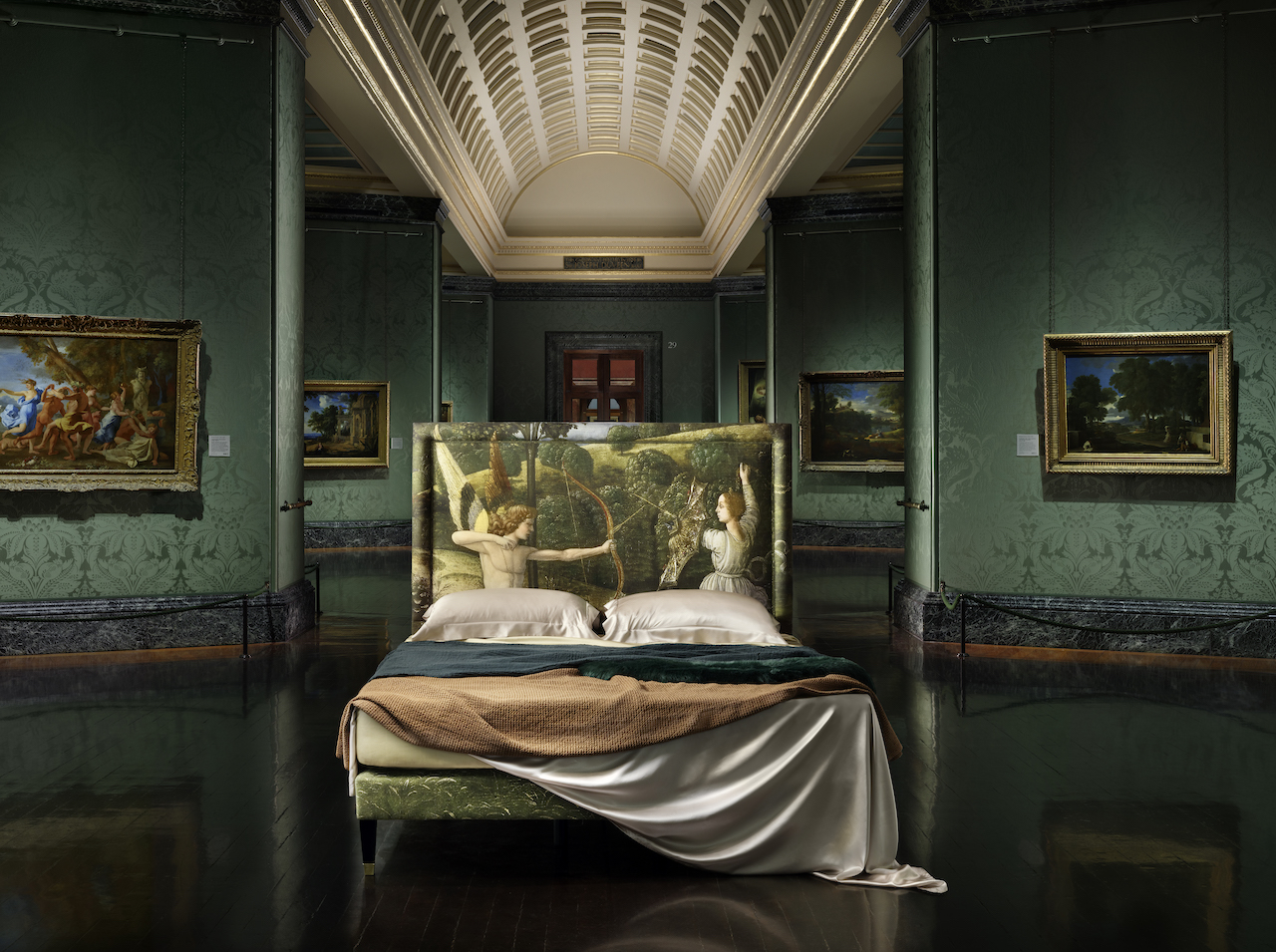 ‘Felix’, No4 Upholstered in a specially printed viscose-linen fabric with The Combat of Love and Chastity (detail), probably 1475-1500 by Gherardo di Giovanni del Fora, 1444/5-1497 © The National Gallery. Georgian legs with brass metal caps.
Each commission begins with the selection of a bed set, headboard silhouette and painting. Savoir's CAD designer then creates a detailed digital model, working closely with the client and upholstery specialists to ensure that important elements of the artwork are accurately positioned. The company also collaborates directly with the National Gallery to preserve the painting's visual integrity.
Once the design is approved, the artwork is digitally printed onto one of three materials: cotton-linen, viscose-linen or cotton-velvet. At Savoir's London Bedworks, the printed fabric undergoes a meticulous inspection before seamstresses precisely cut and stitch the individual sections. Skilled upholsterers then align and secure the fabric onto the handcrafted frame, ensuring continuity between the headboard and base.
Among the examples is Paul Cézanne's Hillside in Provence (circa 1890–1892), reproduced on the Harlech bed in cotton-linen. Its expressive greens and earthy tones evoke a tranquil landscape, lending warmth and texture to the bedroom.
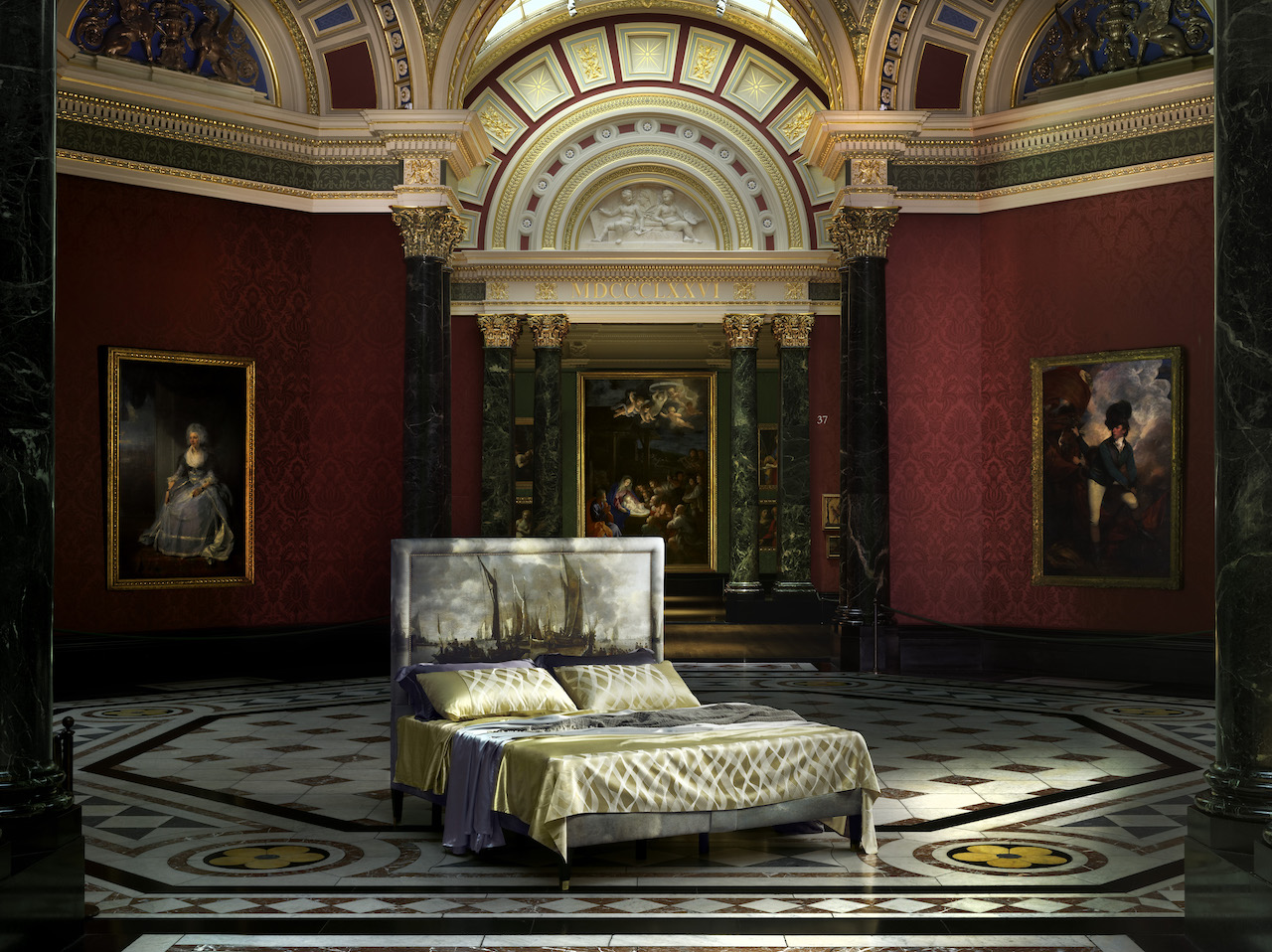 ‘Felix’, No4 Upholstered in a specially printed cotton-linen fabric with A Shipping Scene with a Dutch Yacht Firing a Salute (detail), 1650 by Jan van de Cappelle, 1626-1679 © The National Gallery. Georgian legs with brass metal caps.
Jan van de Cappelle's A Shipping Scene with a Dutch Yacht Firing a Salute (1650) adorns the Felix bed. The Dutch painter's atmospheric seascape, with its silvery-grey palette, lends itself to the design's classical silhouette and Georgian-style legs with brass caps.
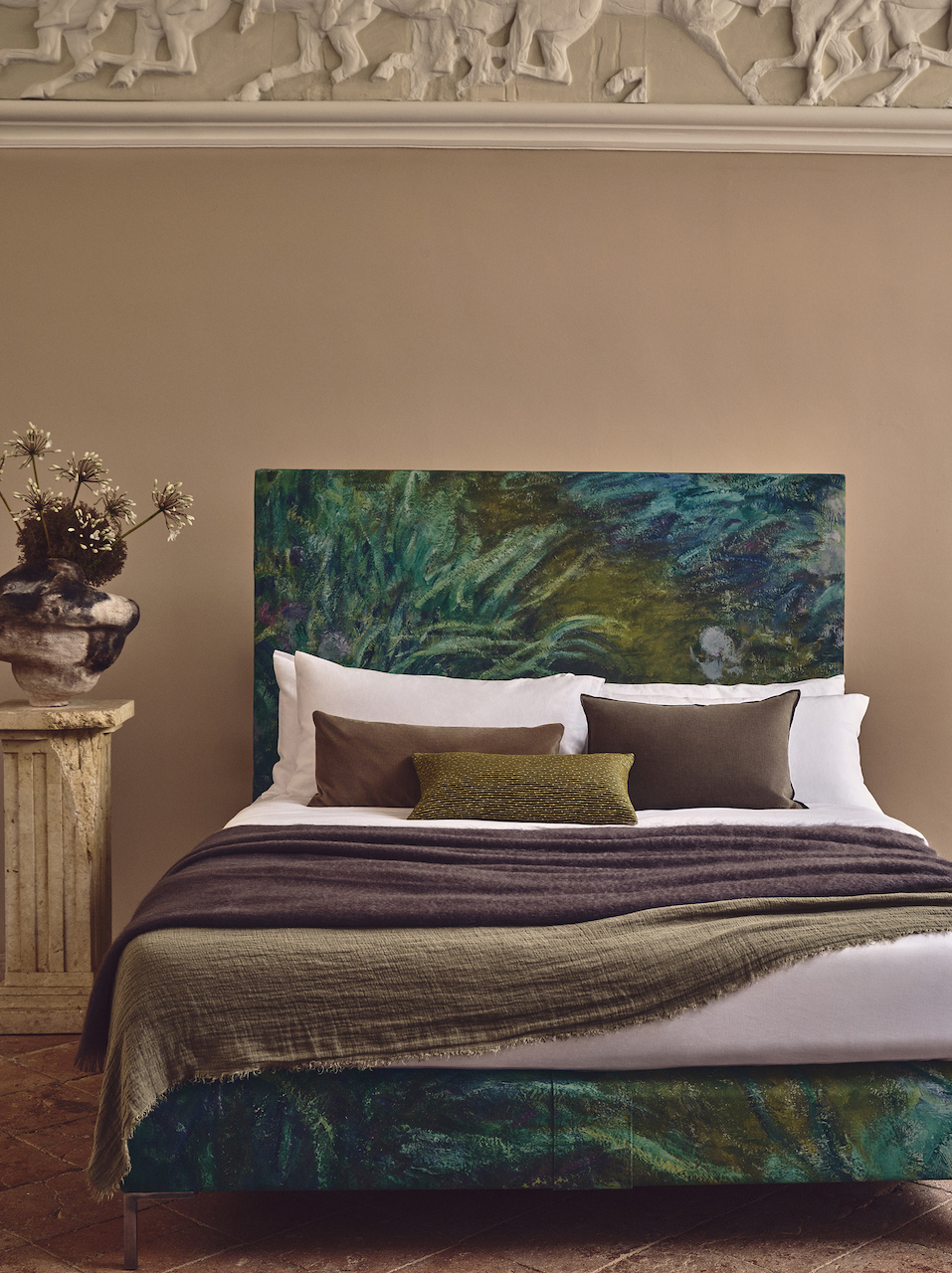
Claude Monet's works provide another compelling interpretation. His Bathers at La Grenouillère (1869), rendered on cotton-velvet, introduces a richly textured interplay of light and greenery, while Water-Lilies, Setting Sun (circa 1907) and Irises (circa 1914–1917) bring his signature Impressionist palette into contemporary interiors.
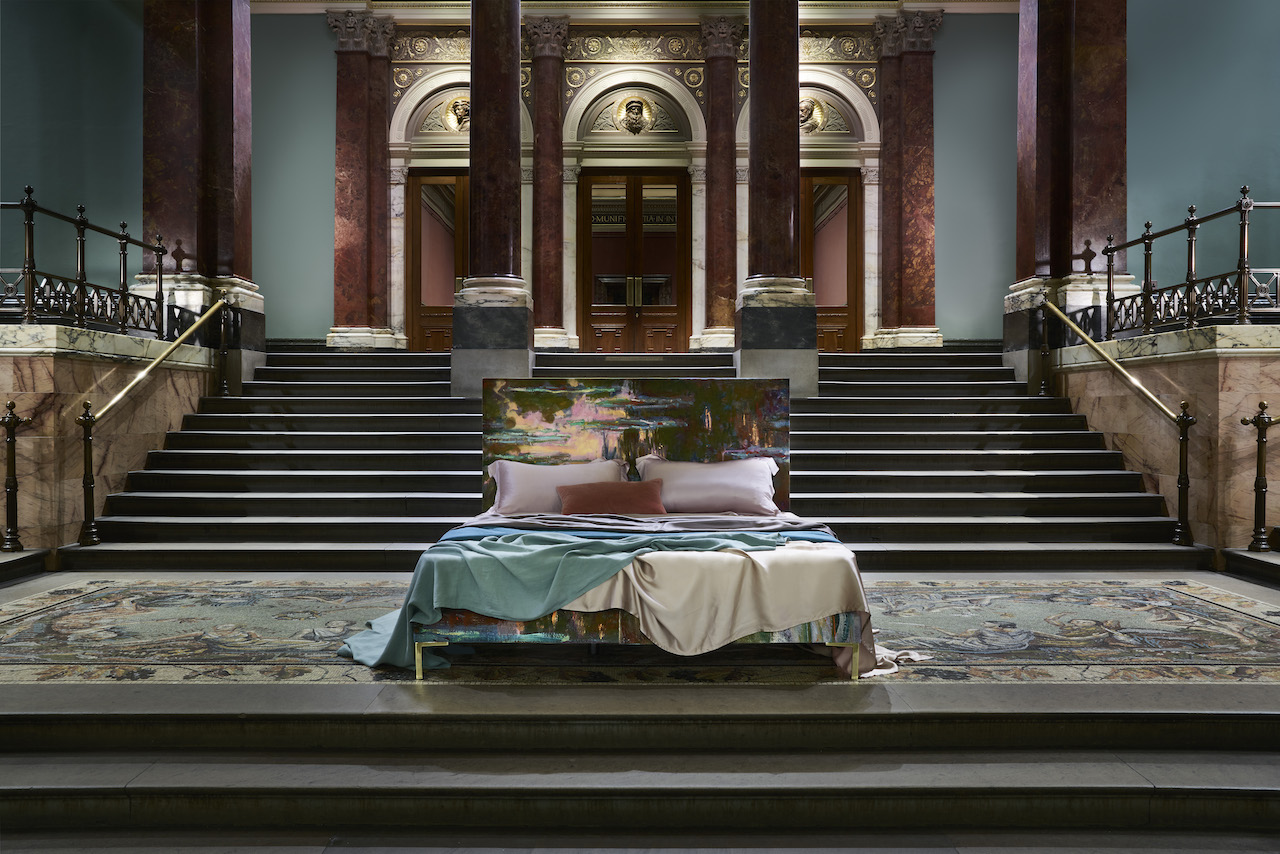 ‘Harlech’, No2 Slim Upholstered in a specially printed cotton-velvet fabric with Water-Lilies, Setting Sun (detail), about 1907 by Claude Monet, 1840-1926 © The National Gallery. Metal legs in brass.
Clients can further personalise their designs through wood trims, piping, decorative nailing and a choice of metal, wooden or upholstered legs. An optional plaque identifying the artwork and artist, or bearing a personalised message, adds a finishing touch.
By bringing together exceptional craftsmanship and artistic expression, Savoir demonstrates how the bed can transcend its functional purpose to become a distinctive centrepiece within the bedroom.
Savoir’s Singapore showroom is located at:
Raffles Hotel Arcade #02-08
328 North Bridge Road
Singapore 188719
For more information, visit: www.luxurybed.com.sg or @luxurybed.sg or Tel: +65 6261-2788