 Share
Share



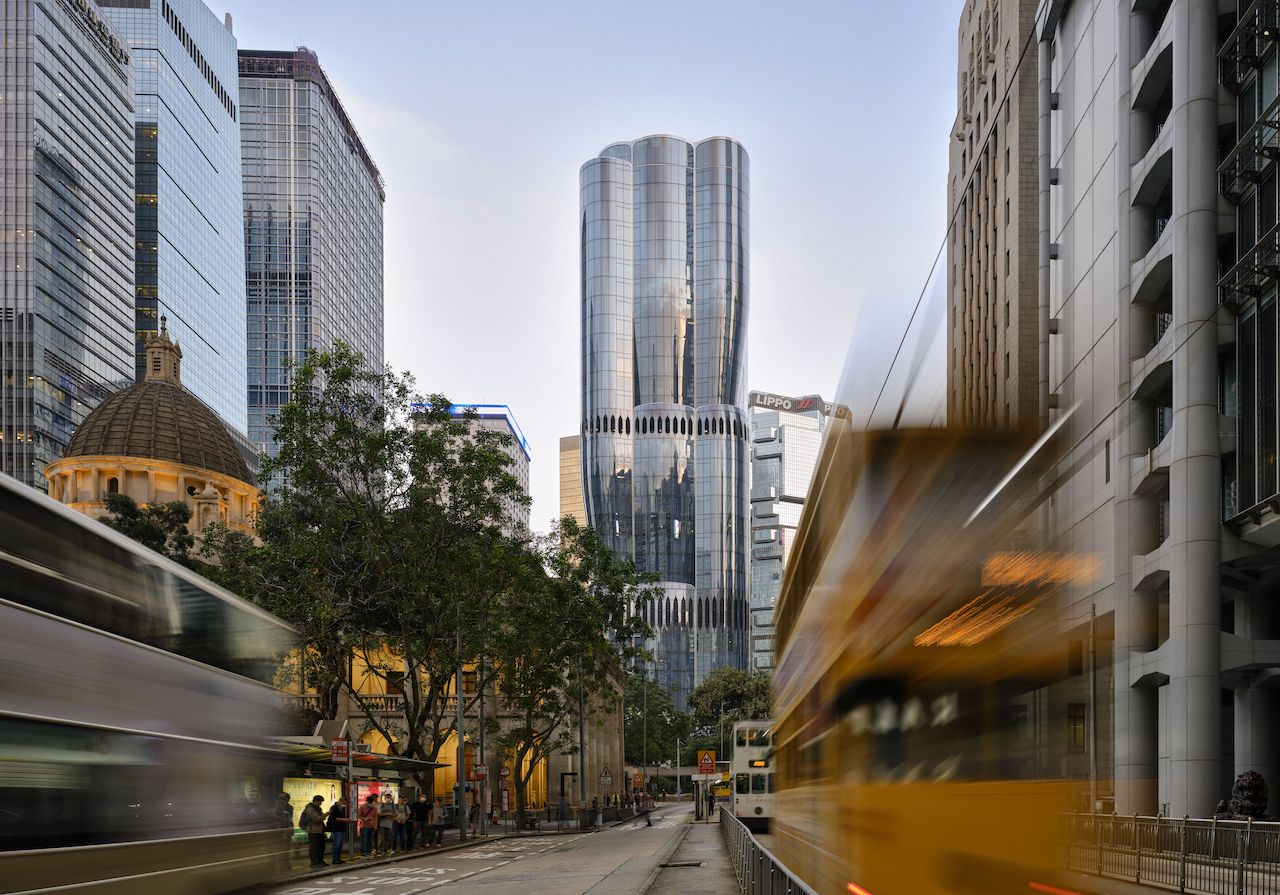
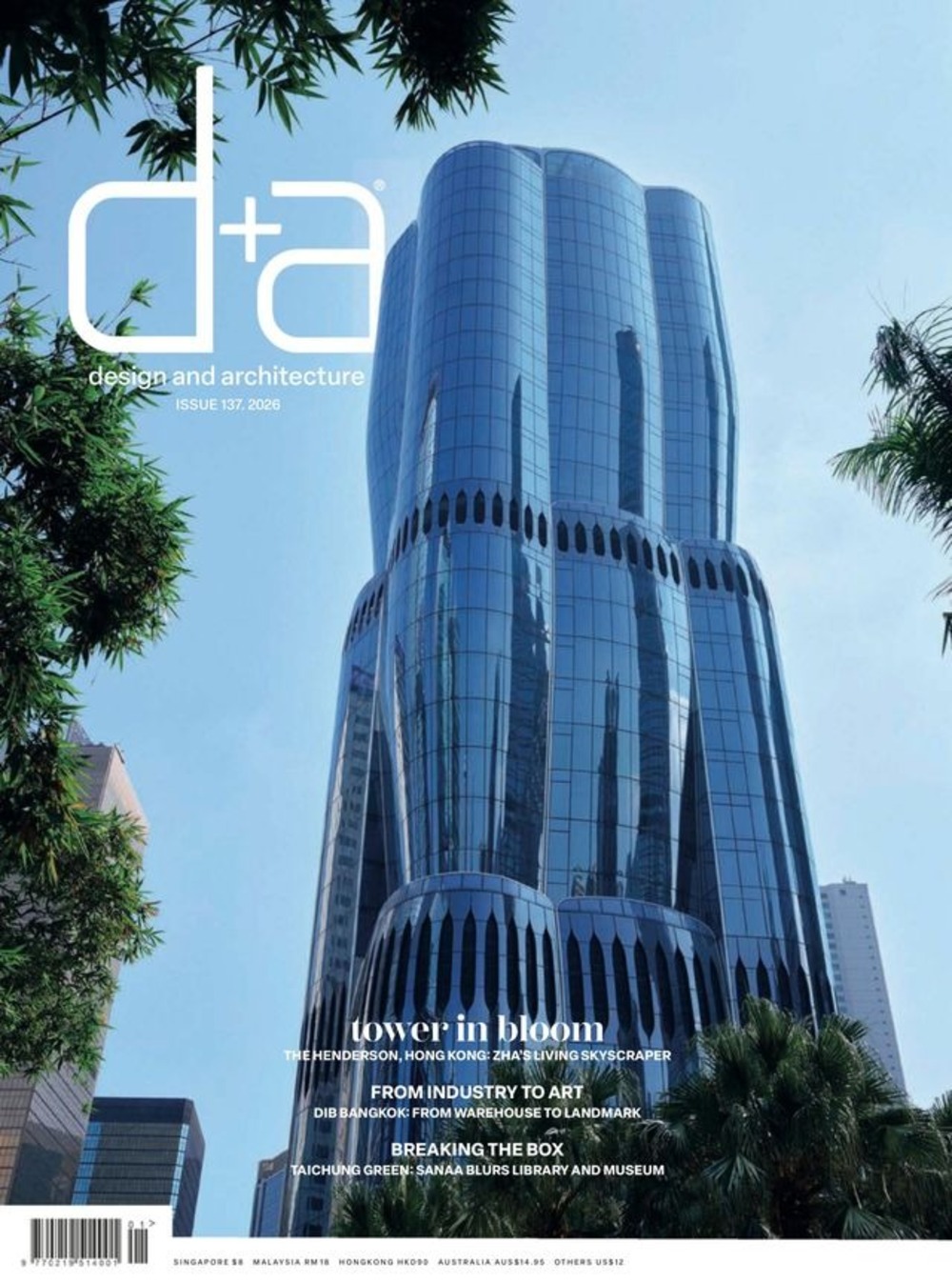
In a sea of orthogonal steel- and-glass towers in Hong Kong, this skyscraper demands a double take. The Henderson pushes boundaries of skyscraper architecture with its stretched, bulbous forms. Completed in 2025 and designed by Zaha Hadid Architects (ZHA), the 36-storey tower for Henderson Land takes its cue from nature – specifically, the structural forms and layering of a Bauhinia x blakeana in mid-bloom. Also known as the Hong Kong orchid tree, this plant has contextual poignancy, having first been propagated in the botanic gardens above the site at Murray Road; its flowering bud is also depicted on the Hong Kong flag.
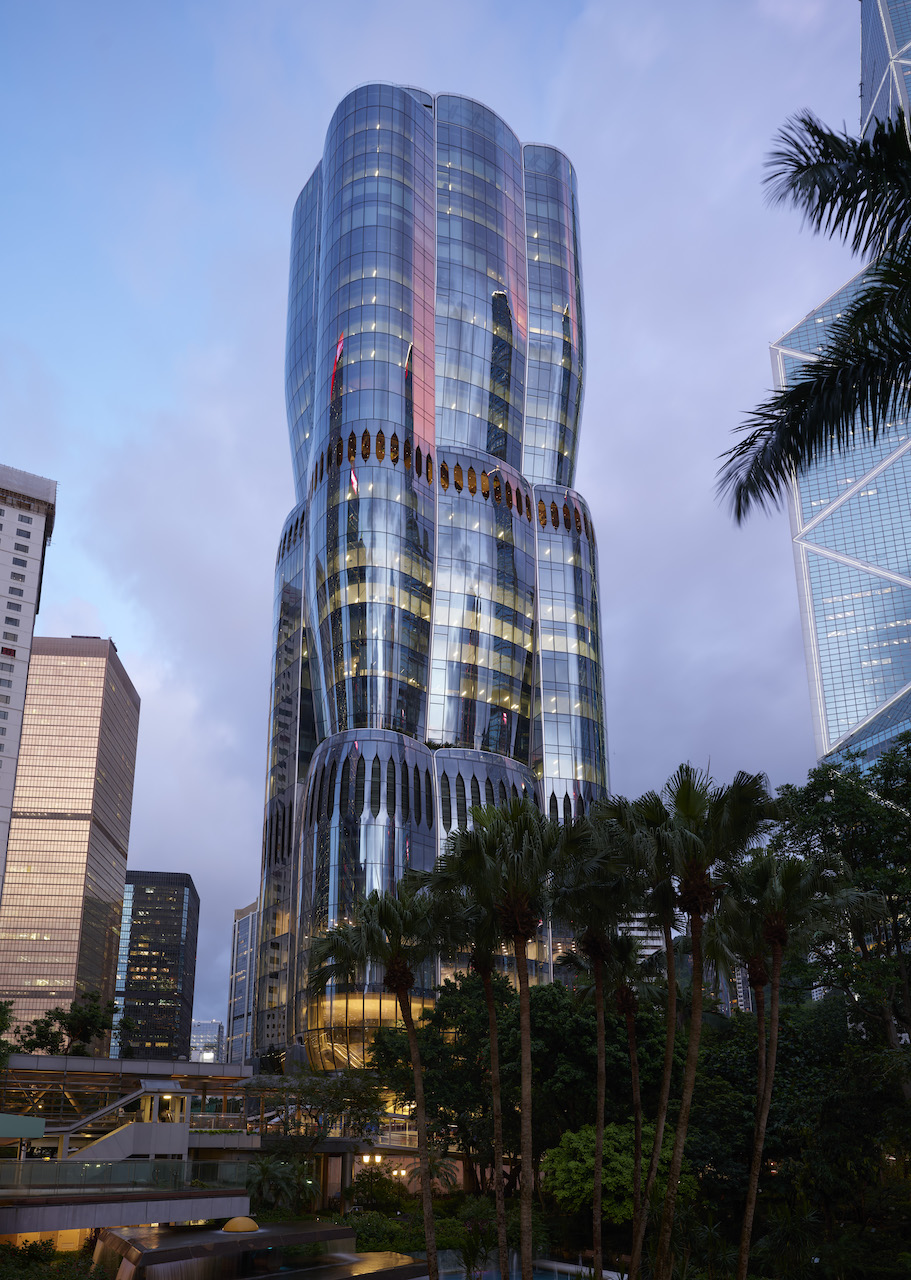
Kaloyan Erevinov, Associate Director at ZHA, points out The Henderson as the new addition to a neighbourhood of architecture greats – I.M. Pei’s Bank of China Tower, Foster + Partners’ Hong Kong & Shanghai Bank, and Paul Rudolph’s Lippo Centre. The Henderson’s height was limited to 190m, adopting “the most efficient structural system to minimise embodied carbon within the tower – in addition to ensuring views from the residential districts on the slopes of Victoria Peak are not impeded,” he shares.
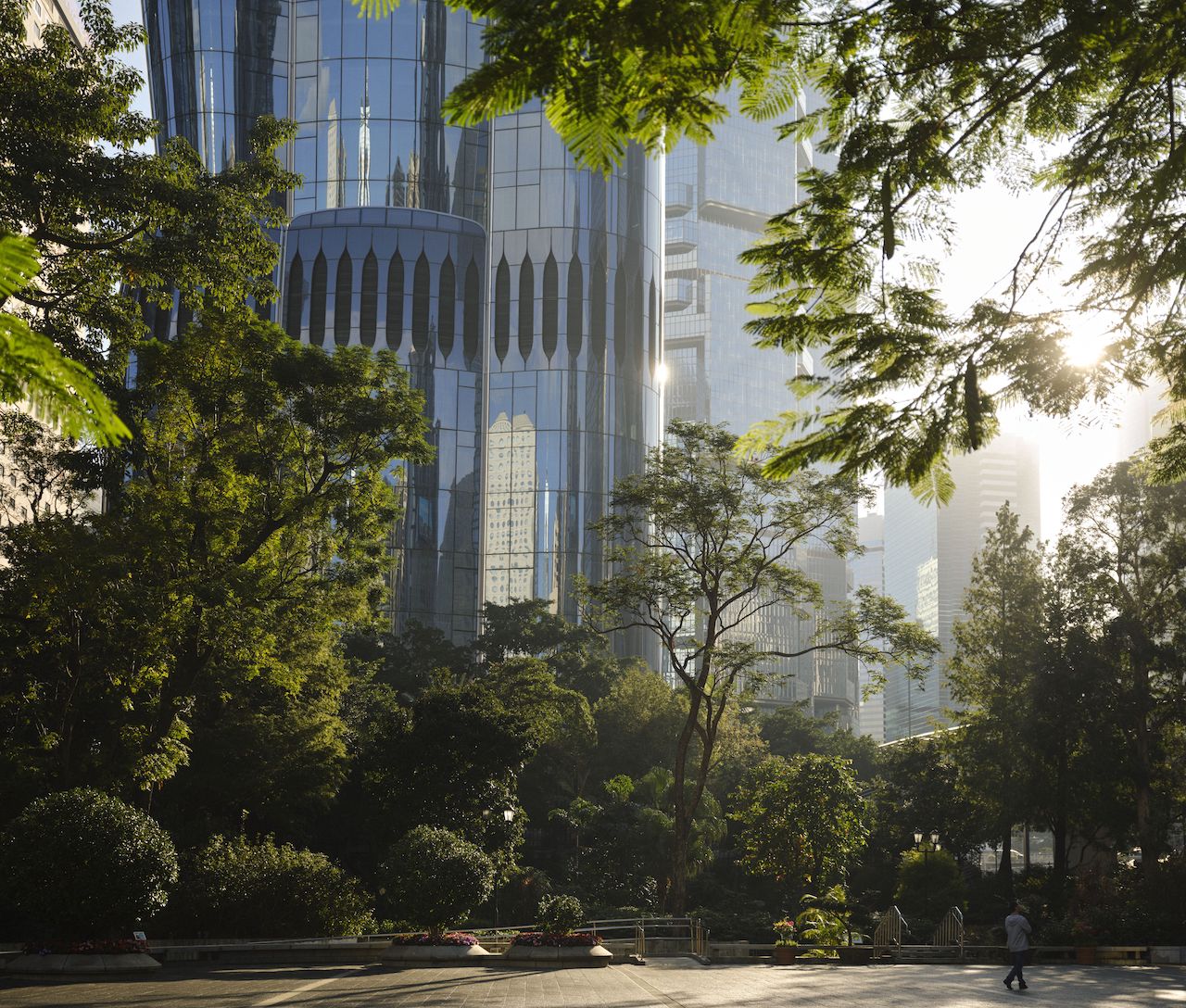
There was a former multi-storey car park on the site, and the new building aims not to be just an object but a green connector in the vicinity. “The Henderson’s architectural design is a very specific response to its unique context, local culture, and programmatic requirements. The site is located in the heart of Hong Kong’s Central Business District, adjacent to Chater Garden – a significant public space in the city – and within a short walking distance to both Central and Admiralty MRT metro stations via the [the city’s] elevated footbridge network,” says Erevinov.
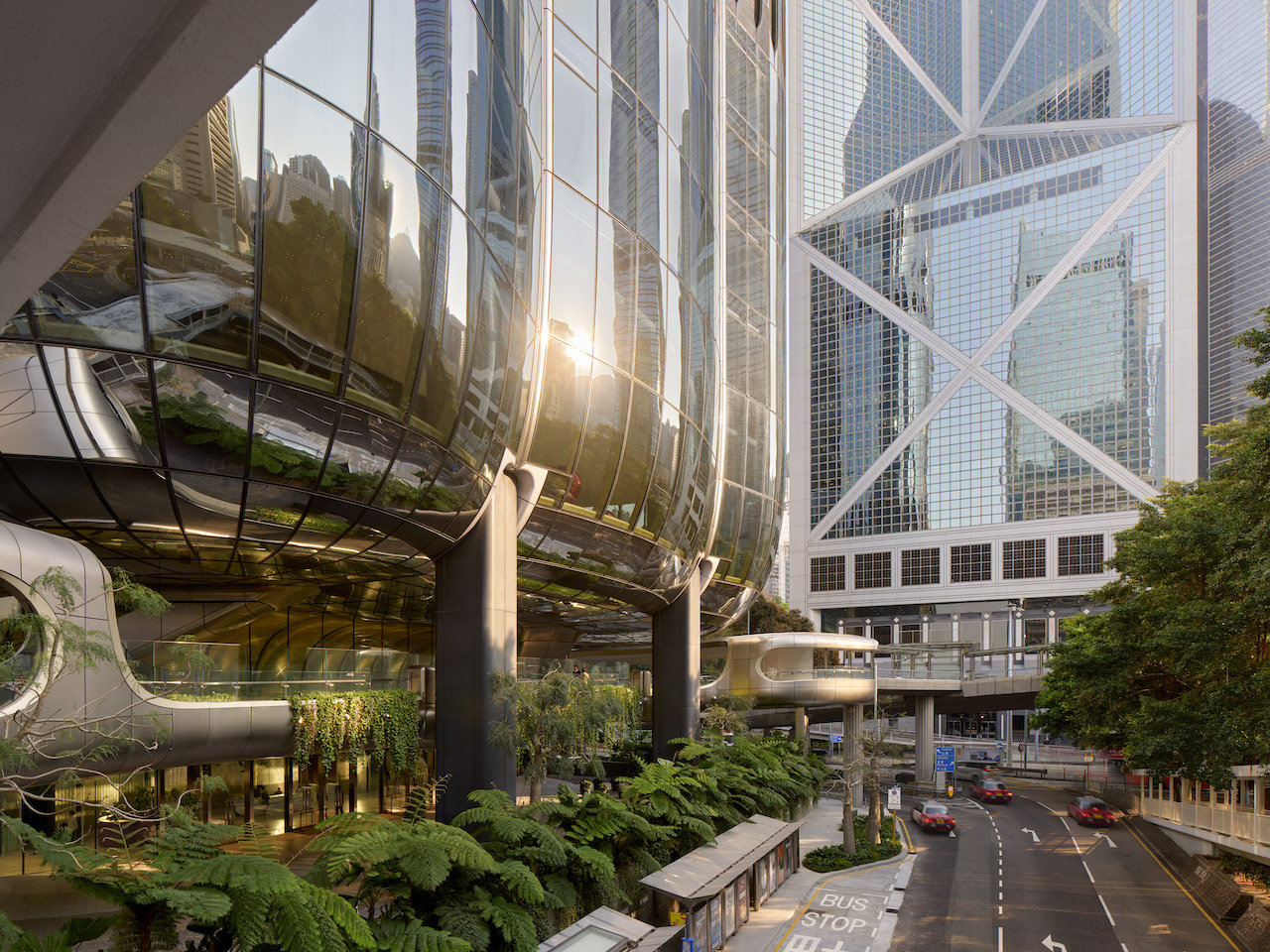
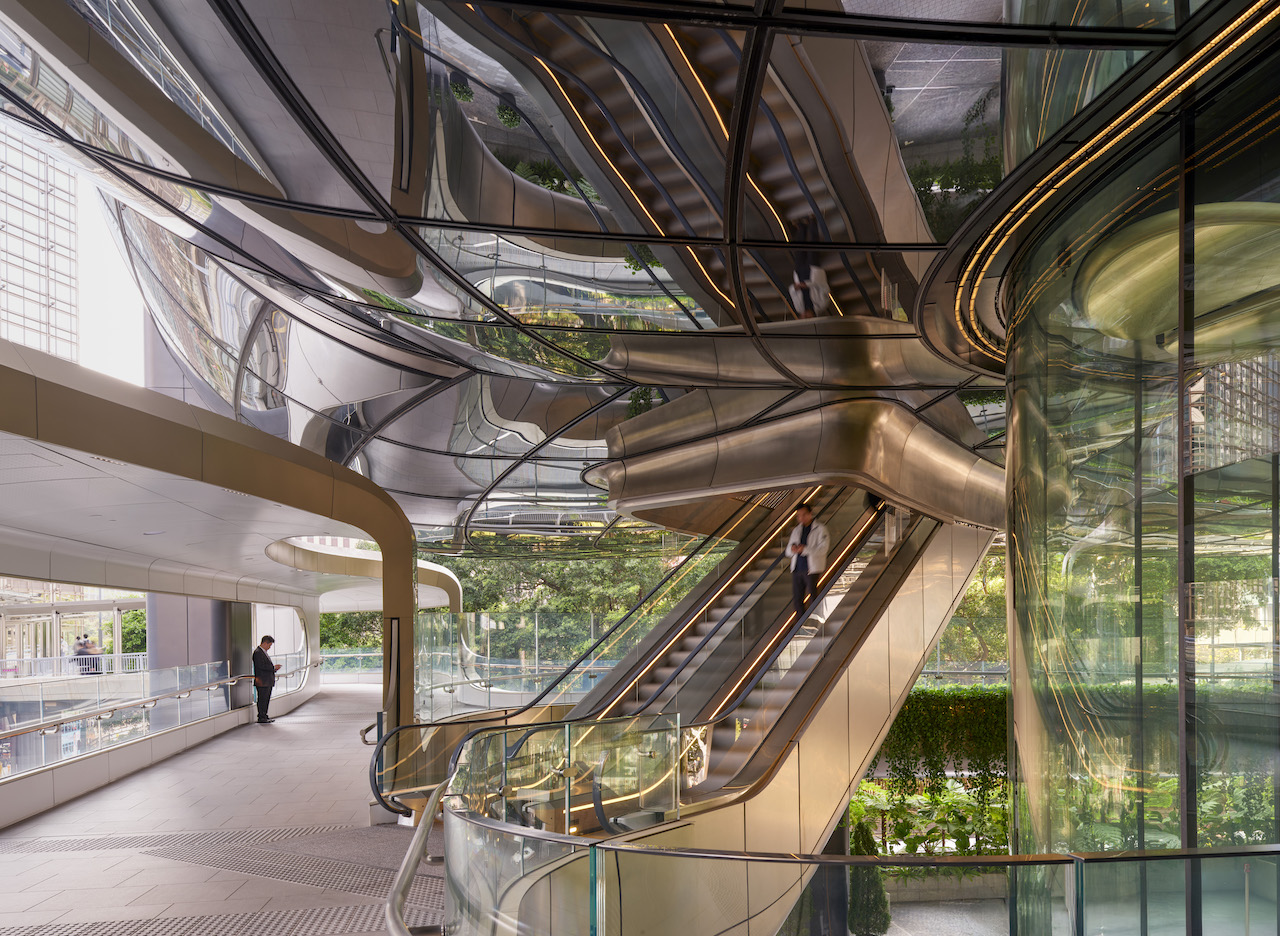
The building’s main volume is raised above the ground, sheltering new civic spaces at ground level. The result is “a new public realm that connects Admiralty with Central, and remains enveloped by nature with direct connection to Chater Gardens,” Erevinov describes. In this setting, the building’s botanical form becomes an abstract extension of the garden. “[It] creates dialogue with the adjacent public gardens, parks and plazas,” Erevinov highlights.
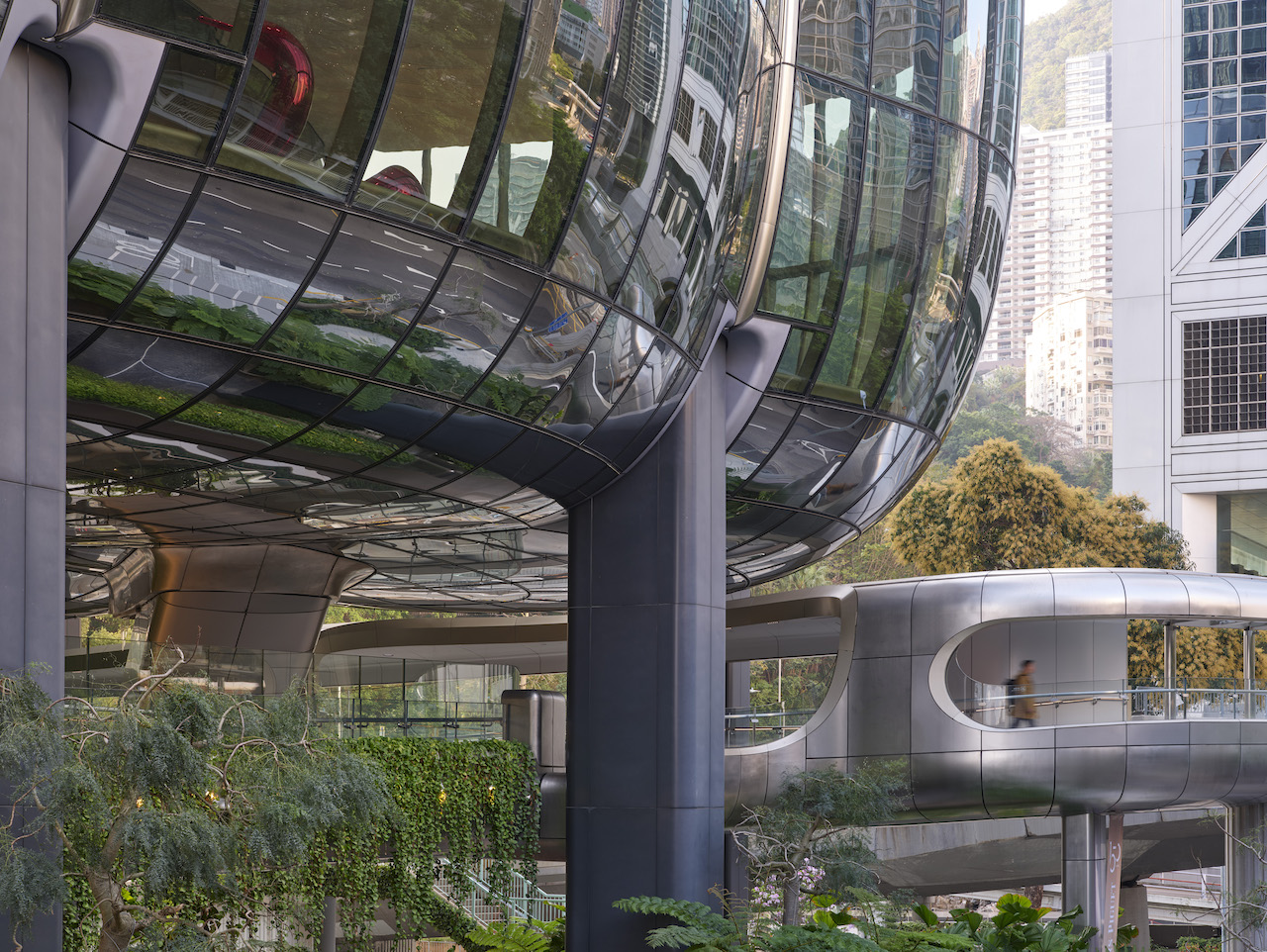
While the tower rises vertically, it is given a sense of scale through horizontal articulations of two “bands” of glass-clad units. There are two points where oval-shaped slits break the seamless surfaces – the lower series hide the building’s main mechanical systems, while the higher series opens a Sky Garden to views. The latter is an open-air communal space for the tower’s occupants, coloured with ample plants. This is one of many spaces in the building with lush greenery. “Access to spaces planted with vegetation is provided at multiple points within the building – at its base where the elevated building shelters gardens cultivated with trees and plants; at its planted balcony levels; and at the Sky Garden located at level 22,” Erevinov shares.
Engineering the envelope
The glass shell of The Henderson is another example of innovation. The four-ply, double-laminated, double-curved insulated glass units of the façade are the first of their kind in Hong Kong; they effectively insulate the building, reduce cooling load, and are resilient to the region’s powerful summer typhoons.
Erevinov elaborates, “The tower utilised a high-performance curtain wall system – Insulating Glass Unit (IGU) with four layers of glass – that comprise a two ply-laminated outer assembly with silver reflective coating and low-e coating, and a two ply-laminated inner assembly with an additional anti-reflective coating for enhanced visual comfort.” This allows for complete UV light penetration cut off and sufficient thermal insulation too.
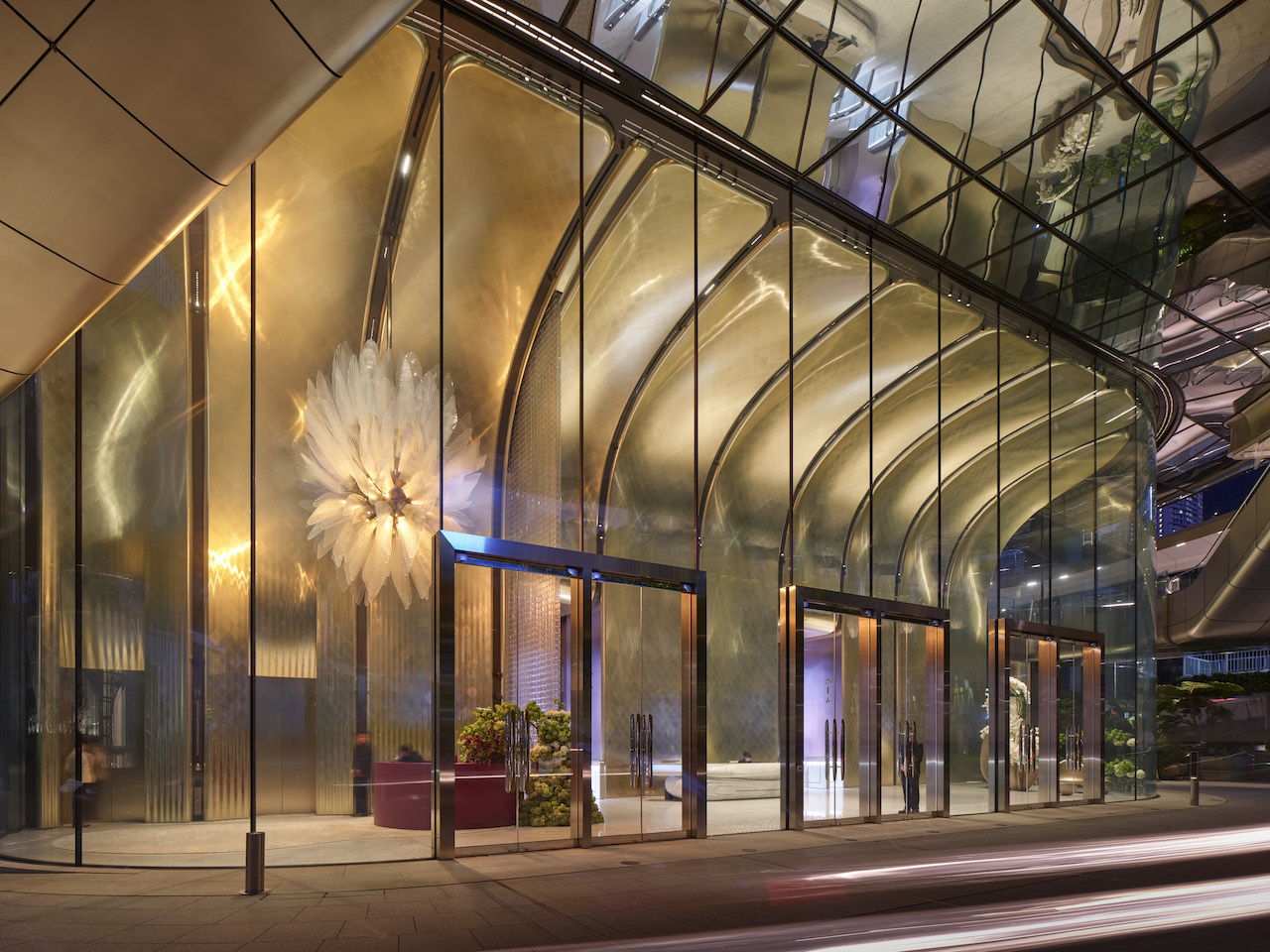
The arrival sequence into the building is no less considered. Curved metal panels fabricated by Neal Feay company in Santa Barbara, USA mimic the petal geometry of the exterior, composed of “interlocking parallelogram modules to create continuous, curved surfaces,” says Kar-Hwa Ho, the Head of Interior Architecture at ZHA. “The finish subtly transitions from a warm golden hue at the upper levels to a cooler silver tone below, reinforcing the vertical movement through the space, and reflecting light from the chandelier and the surroundings.”
Arrival as experience
Like the exterior, the lobby exhibits artisanal skill and uses premium materials. “The reception desks are sculpted in marble, while a bespoke carpet intricately woven by Pinton introduces softness and warmth underfoot. Together, these elements create an atmosphere that is both welcoming and refined,” says Ho. Nature joins in the dialogue here, starting with a levelled stone plinth, and low- to mid-level planting along the perimeter at the east and south that buffers from traffic.
“The main focus comes to the West Arrival Plaza, where terraced and carefully graded planting provides filtered visual connection to Chater Gardens,” Erevinov adds. A five-storey-high green wall rises on the building’s eastern elevation, “naturally turning the greenery upwards,” he says. Local species are mainly used, and a garden designed with art pieces provides a welcome to the tower from the north. Clearly, nature is no afterthought at The Henderson, but an integral part of the experience, worked into urban design, biodiversity, and the skyline.