 Share
Share



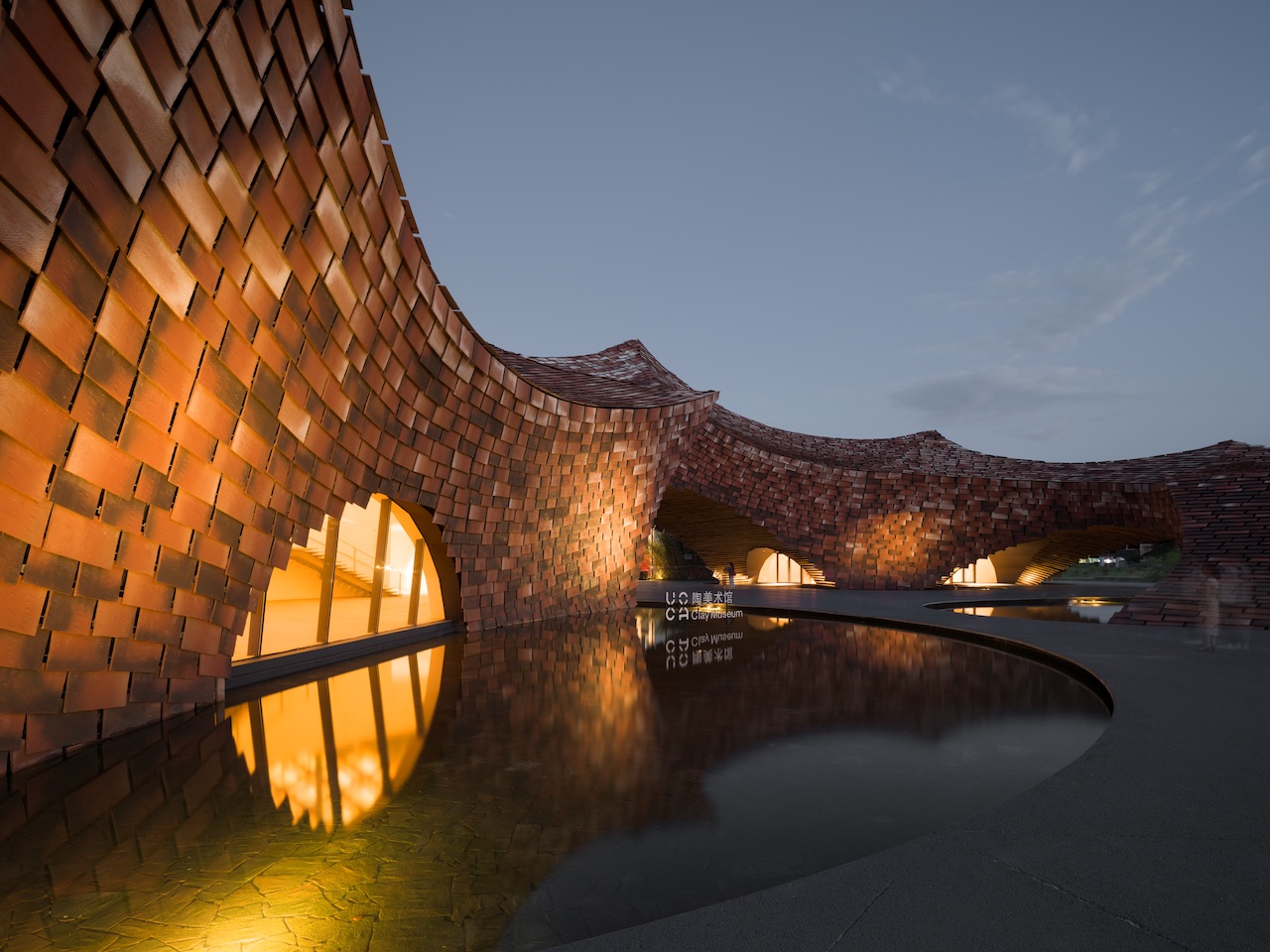
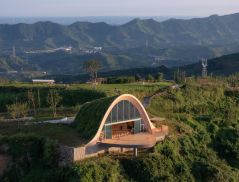
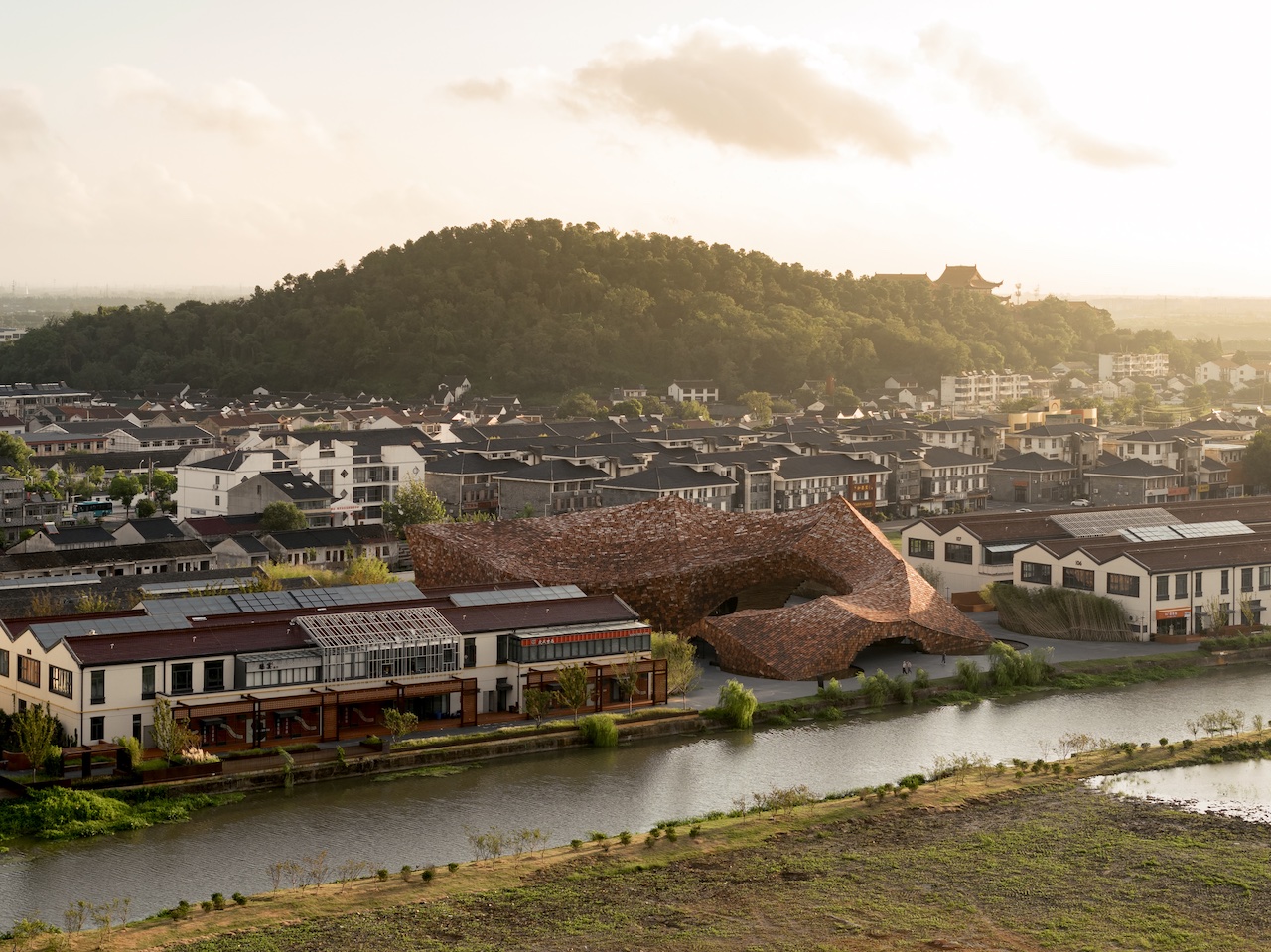
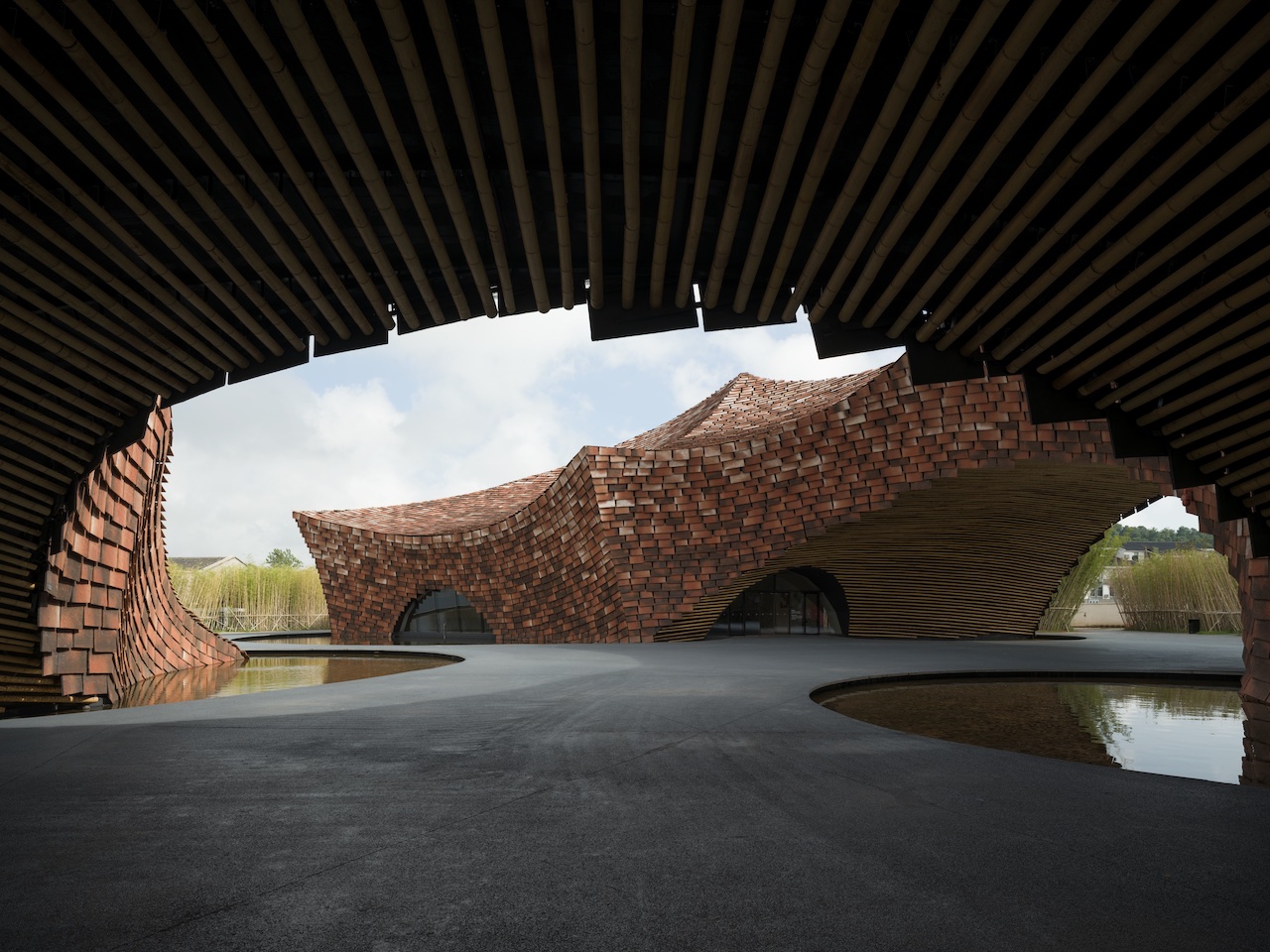
In Dingshu Town in Yixing, China, an amorphous creature has arisen amidst the traditional buildings. Its sinuous form rises to sharp points then dips low to the ground, like a dragon crawling along the earth, as if pondering its next move. This is a new building unveiled in late-2024 by KKAA (Kengo Kuma Architects & Associates), and pays homage to the town’s ceramic-making history.
 © Eiichi Kano
In Yixing, the production of ceramics goes back 7,000 years to the mid-Neolithic era. The pottery culture elevated from simple patterns when Zisha was discovered during the Song and Yuan dynasties (circa 960 to 1368 AD). Henceforth, Yixing became synonymous with exquisite tea-ware made from the ‘purple earth’ in the area. The clay contains iron, kaolin, quartz and mica that when fired, results in a strong, porous structure, facilitating air and heat convention. Used overtime, the tea-ware enhances the flavour of tea.
 © Eiichi Kano
In recent decades, ancient clay mines in Yixing shuttered from the damage of over-mining, and this part of the project where the Yixing Zisha Craft Factory No. 2 was located had been decommissioned. The new UCCA Clay is a museum planned as part of a larger vision to revitalise the small town and anchor its position as a dedicated ceramics centre for an international audience. Spanning 3,437 sqm, the museum is only two-hours away from Shanghai via high-speed rail, making it a veritable destination for the learning of local craft and culture.
Local inspiration
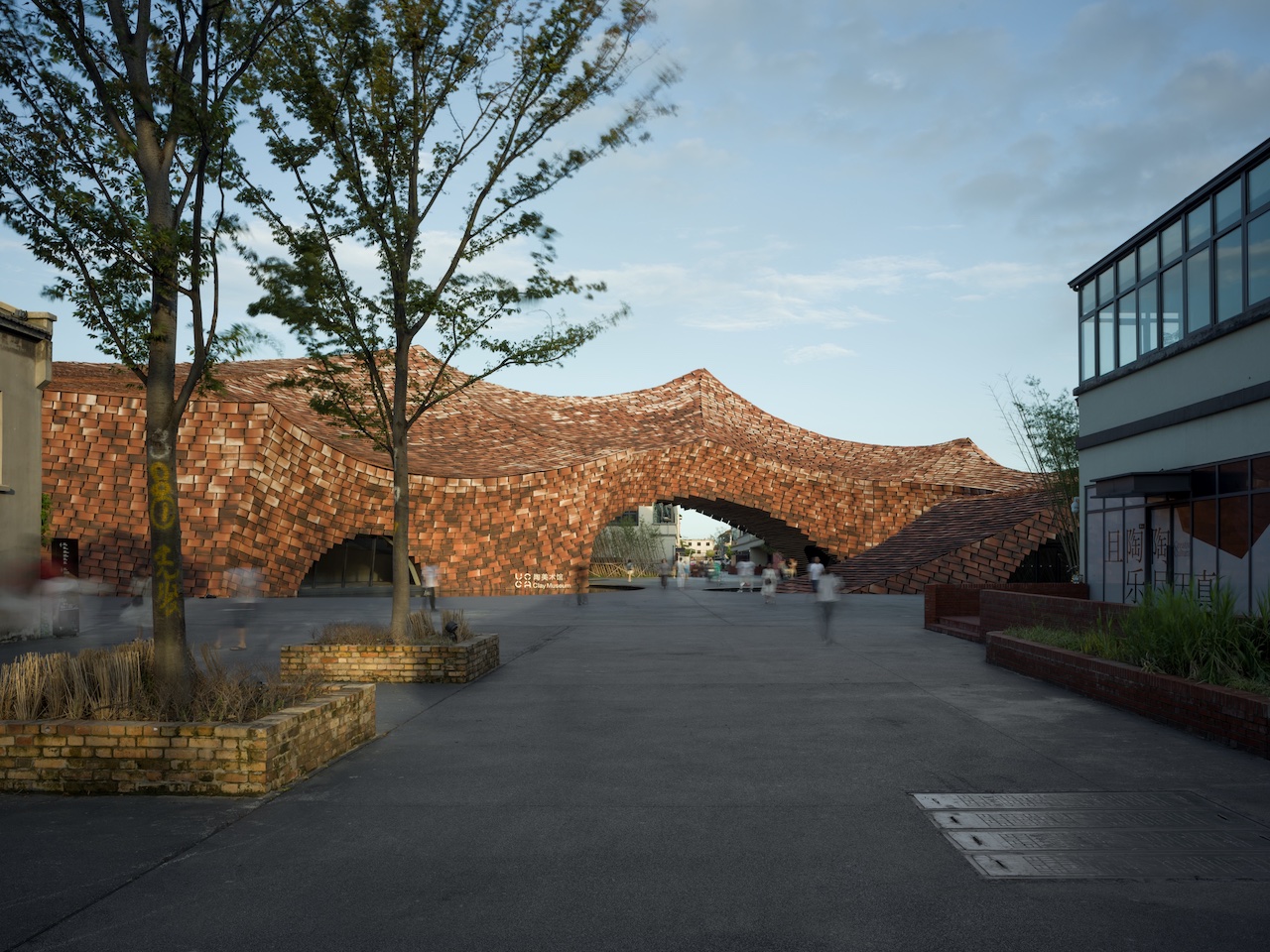
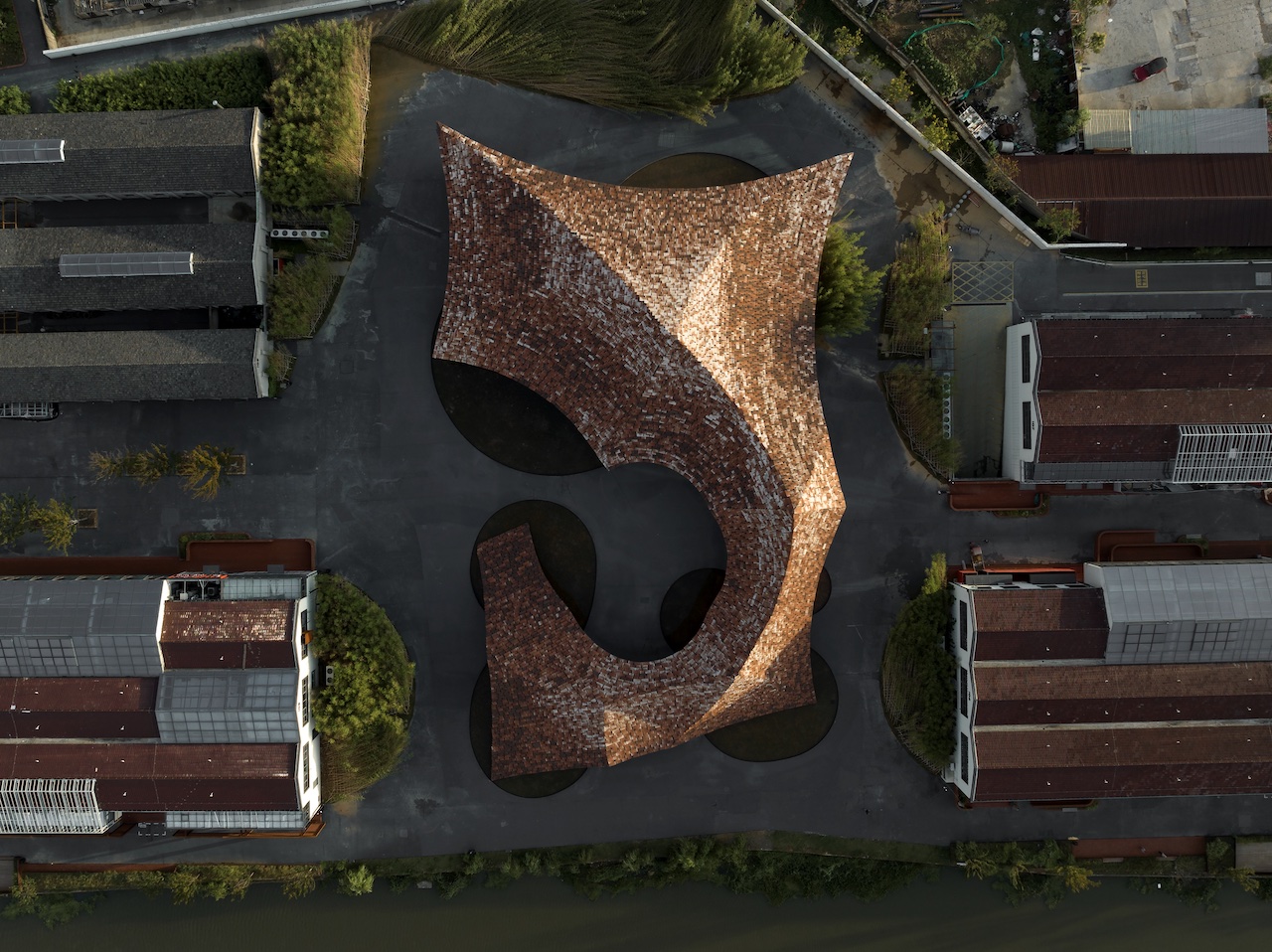
Rather than a faceless glossy, modernist structure, the KKAA design team looked to the locality for inspiration. The organic lines of the surrounding mountain ranges and ancient mining sites are echoed in the architecture that combines roof and walls into one single, continuous plane.
“The volume resembling a mountain of pottery is inspired by Shushan Mountain, located near the project site and cherished by the Northern Song dynasty writer Su Dongpo, as well as by the dragon kiln – a climbing kiln that has been in continuous use for 600 years. The mountain-shaped volume was punctured to connect with the pottery factory and the canal, seamlessly integrating the building with the site’s axis and the surrounding factory complex,” the design team describes.
 © Eiichi Kano
On the ground level, two smaller spaces enclose a café and multi-functional room at the entrance. This leads to a larger, two-storey building containing galleries. The lower level contains the permanent exhibition while a sloping staircase sweeps up to the temporary exhibition upstairs.
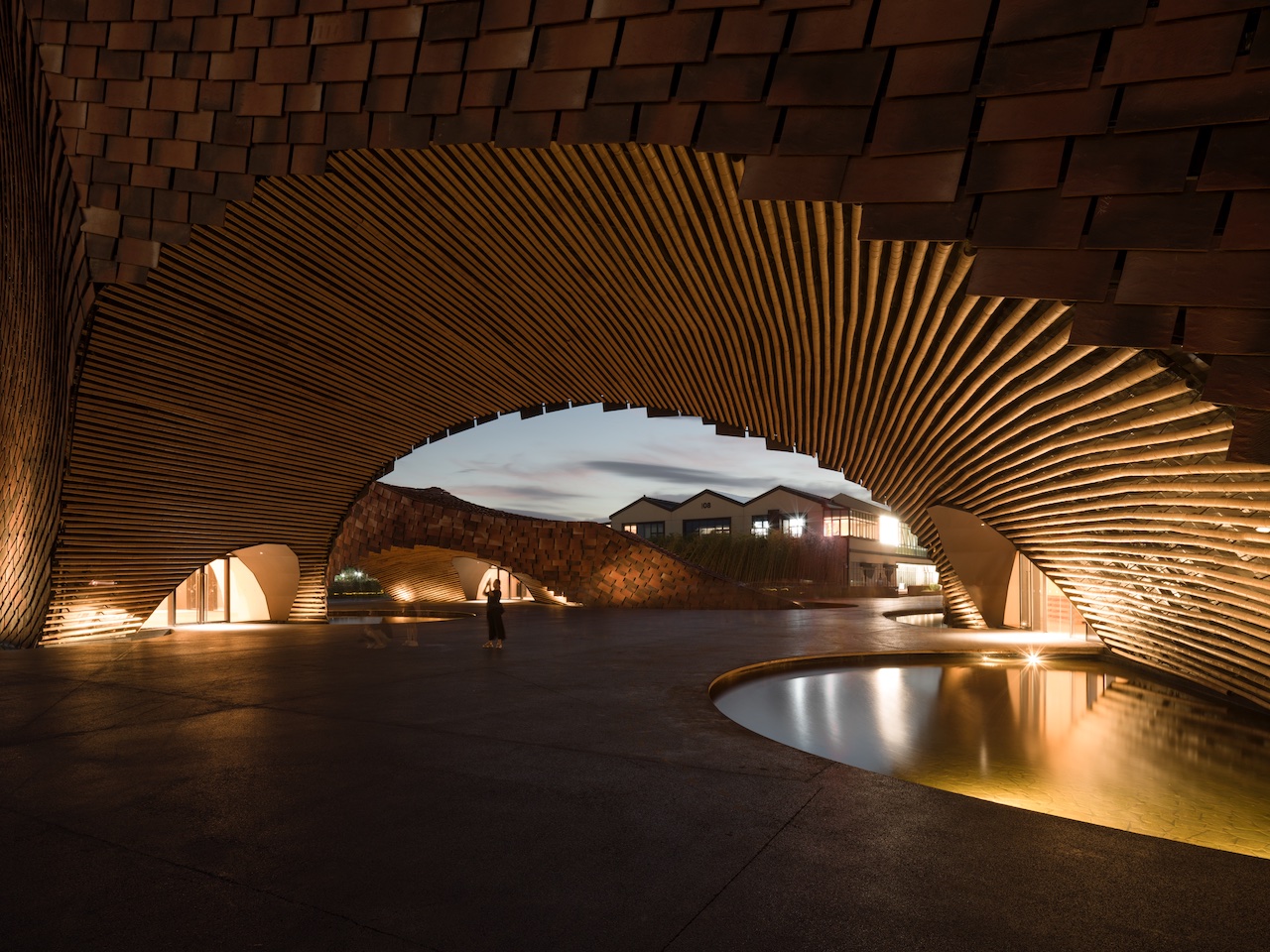
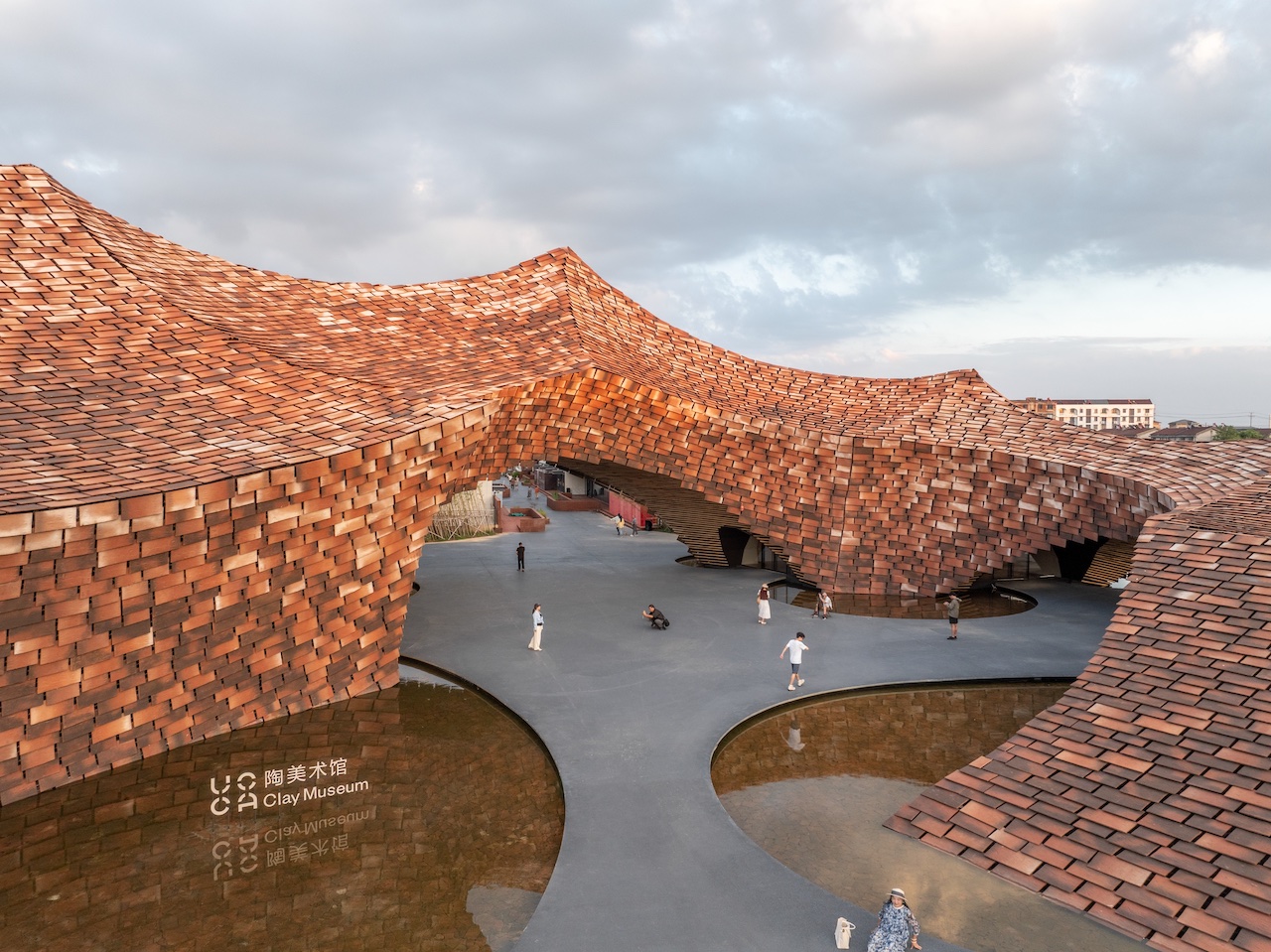
All three spaces are connected via the continuous building ‘skin’, which also provide shade, shelter and subtle way-finding. At the exterior, the amorphous architecture lifts upwards at parts to reveal tall arched openings that allow visitors to survey the surrounding area. Feature pools interspersed along the route bring relief and interest to the ground plane.
 © Eiichi Kano
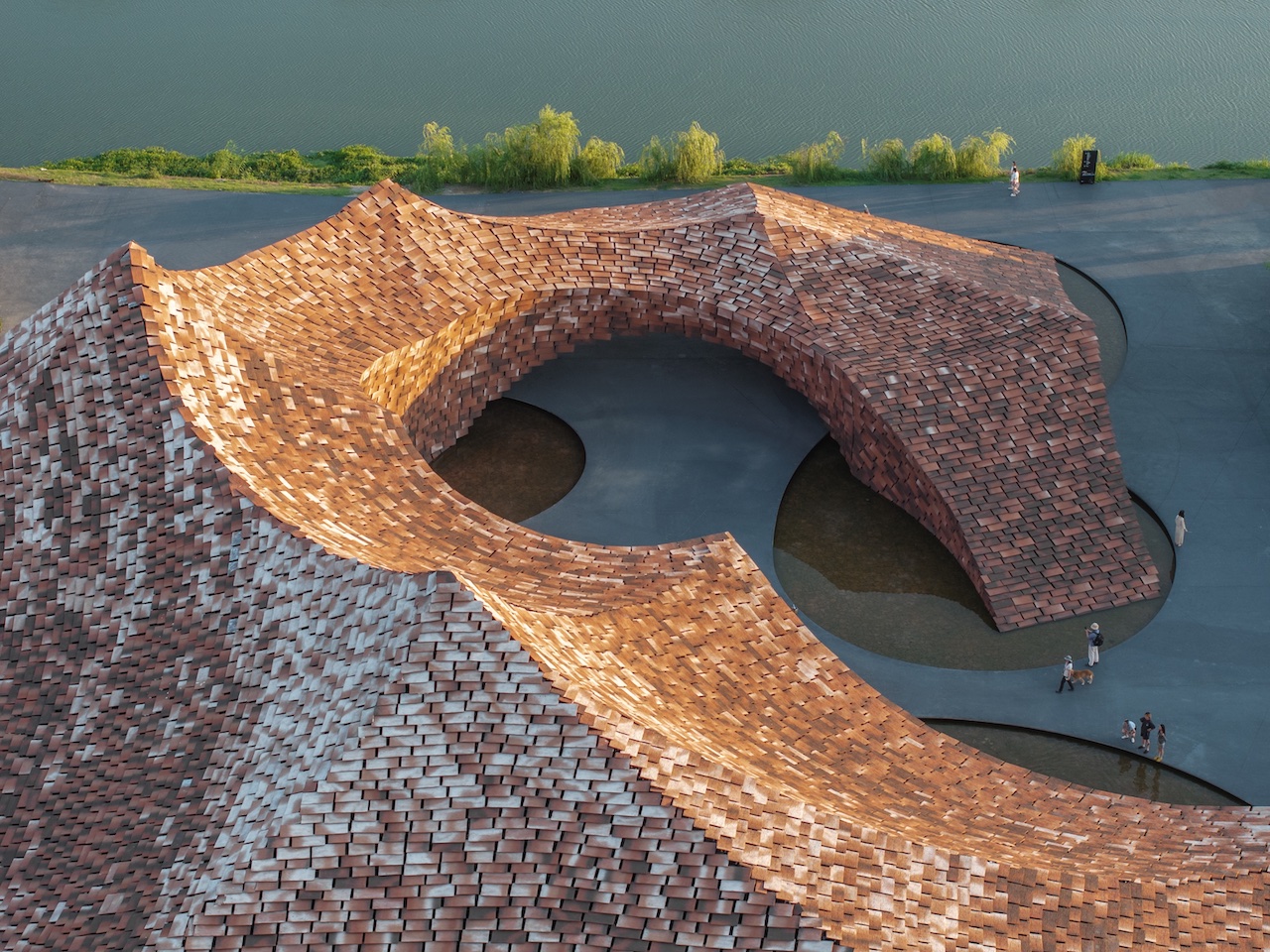
On the skin, the 3,600 ceramic tiles made by local artisans covering the structure lend a sense of scale to the gargantuan form. Their materiality results in variation in colour over the course of the day and eventually over time, will gain patina. This gifts to the building the “warmth of craftsmanship”, as the design team intended.
“The façade, which evokes the ‘temperature’ of pottery in the manufactory, was developed in collaboration with local artisans,” shares the design team. “Warm and slightly coarse to the touch like Chinese tea-ware, these ceramic panels embody the history and culture of the ceramic city, which has been passed down through the generations for more than 1,000 years.”
 © Eiichi Kano
The unevenness provides a human touch to the architecture – a rarity given the sterile glass and steel edifices that embody the idea of modernity in cities today. In this way, the building joins the threads of history, present and future. Nor pastiche nor extreme abstraction are present, resulting in a genuine work of craft.
Structural space
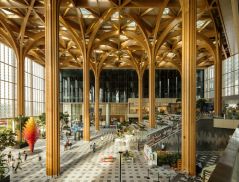
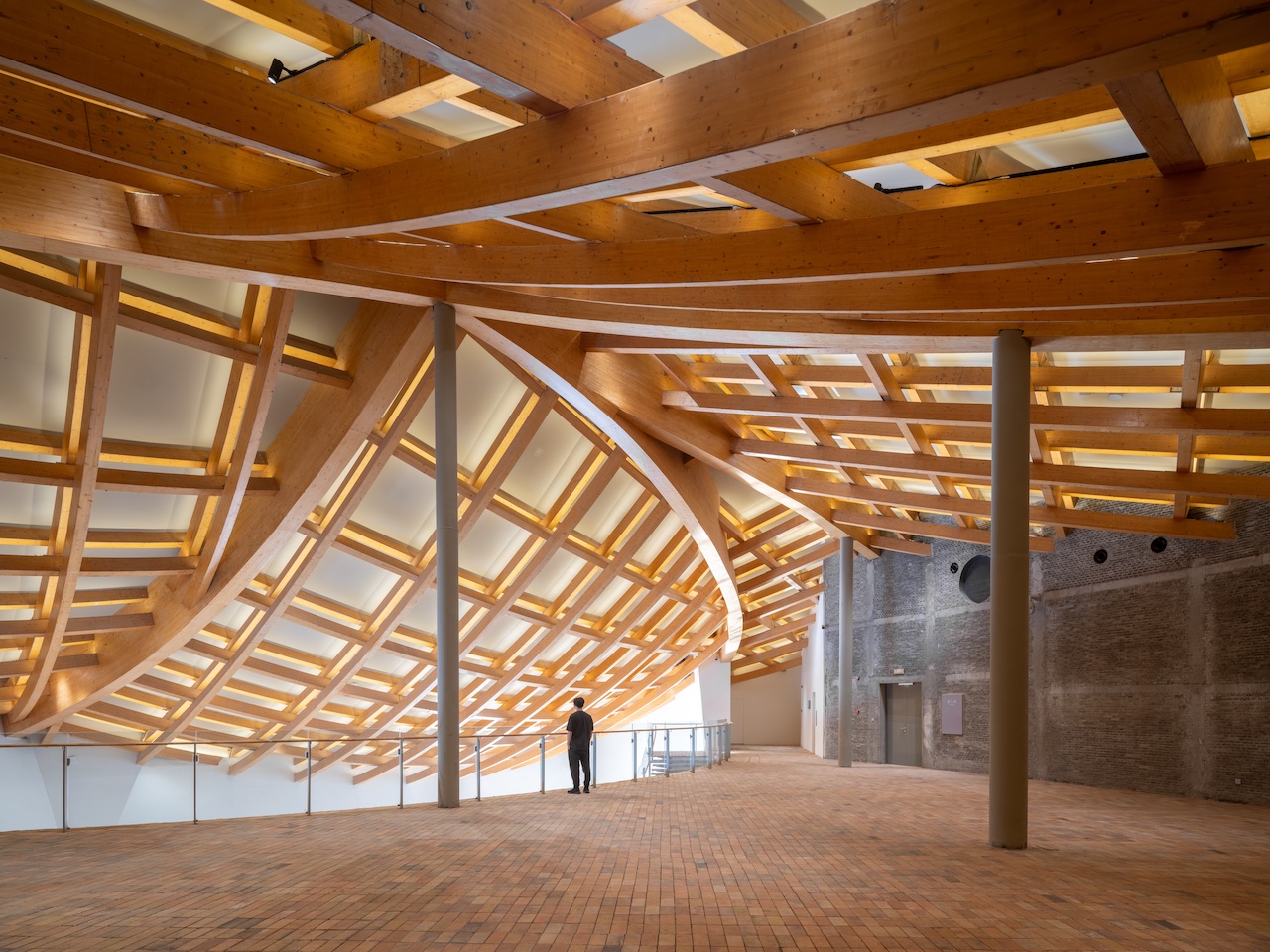
While the exterior is all about the skin, the interior expression focuses on structure. A four-layer wooden grid of lattice beams supports the tiled roof. Its woven expression presents a sense of lightness despite the ceiling’s expanse, and also creates voluminous exhibition spaces to suit the program.
 © Fangfang Tian
The interwoven pieces allow for the filtering of daylight through skylights that shine on recycled brick flooring. “This light yet strong wooden structure brings dynamic changes to the interior space, and draws the line of sight and circulation flow deeper into the building,” the design team says.
 © Fangfang Tian
The complex architecture of UCCA Clay was designed using advanced digital tools. It presents a bold response to the needs of urban rejuvenation. The symbolism is clear and heartfelt. Expressed as an object in the space rather than tied to other existing structures, it can be viewed like a piece of pottery writ large.