 Share
Share



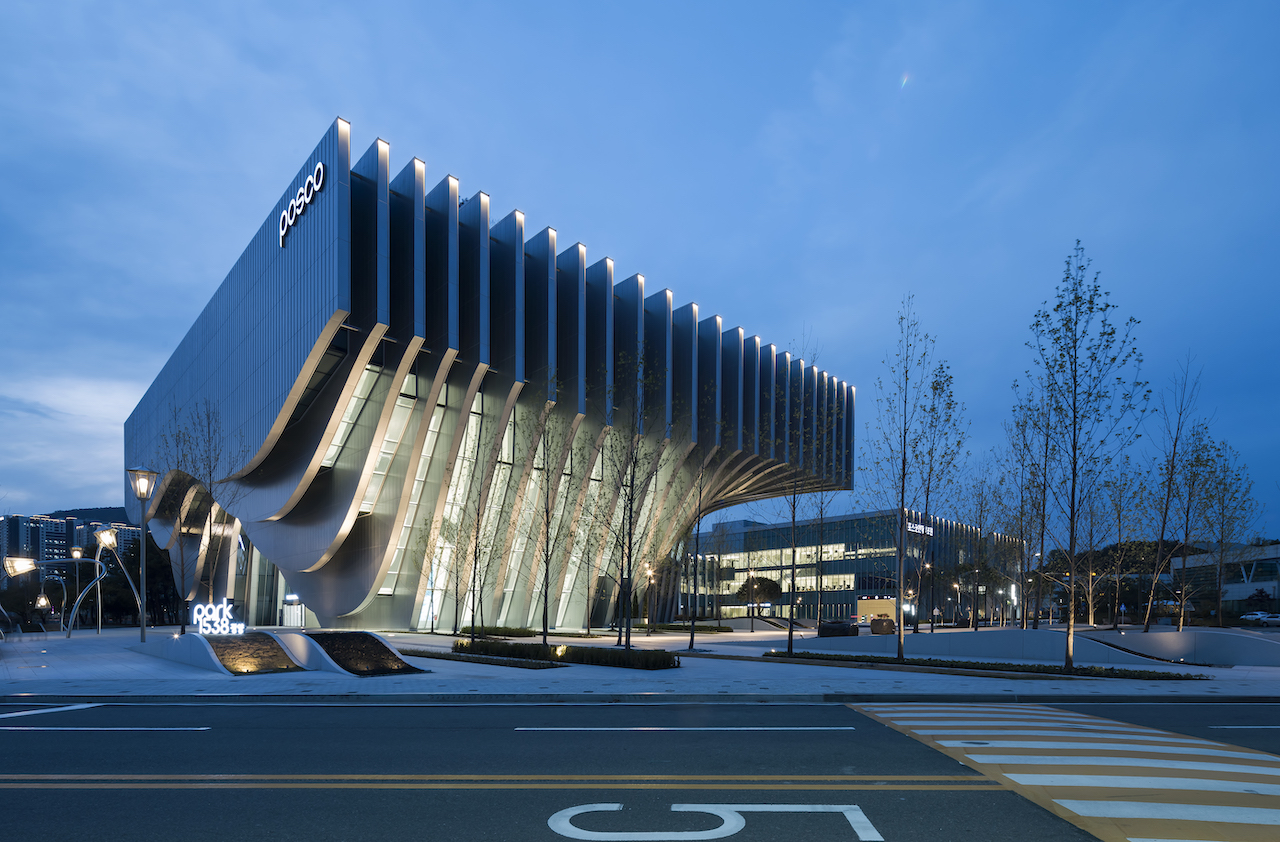
Steel manufacturing and artistic culture vary vastly – one is grit and industry; the other cerebral and abstract – but they are both intrinsically about production and contribute to the mechanisms of humanity and humankind. The two come together in Park1538 Gwangyang, a project sited within the industrial grounds of POSCO Gwangyang Steelworks. The South Korean multinational company is one of the world’s largest integrated steel plants, producing for the construction, automotive, shipbuilding, energy and consumer goods industries.
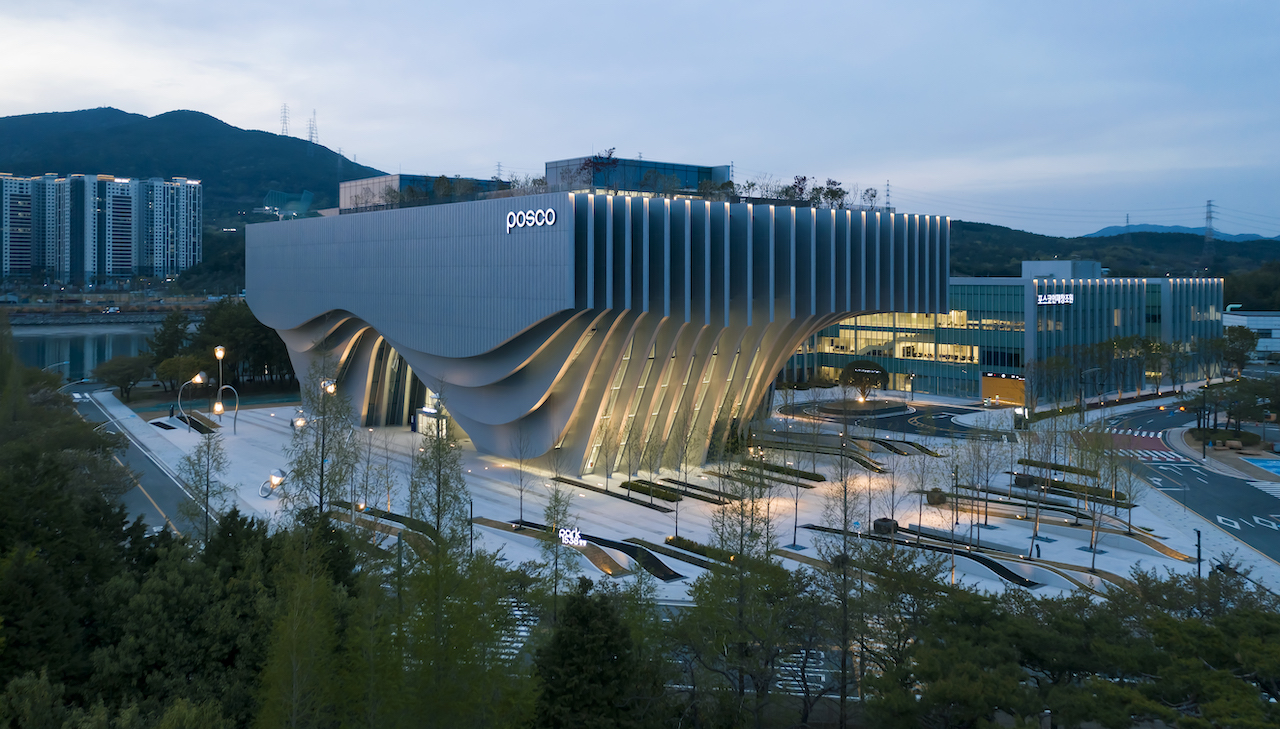
“The goal was to transform the Gwangyang site into a destination where visitors can engage with the history, technology and social impact of steel, while also experiencing art, exhibitions and landscape design,” shares the design team of Unsangdong Architects, helmed by Yoongyoo Jang and Changhoon Shin and that was engaged to design Park 1538 Gwangyang. The cultural and educational facility showcases POSCO’s steel production to the public, and was designed together with POSCO A&C.
Steelmaking plants are typically closed-off areas, away from the city’s bustle and everyday urban life. The company hoped that by inserting a cultural facility within an industrial area comprising steel production lines, port facilities and logistics yards, the complex scopes of steelmaking would be made accessible and meaningful to a wider audience. Formerly on the site was a large glass greenhouse, constructed and operated by POSCO to promote advanced agricultural technologies. Already with this initiative, POSCO’s dedication to industrial experimentation was palpable. The area’s transformation into Park 1538 Gwangyang pivots the focus from agricultural to cultural production.
Balancing sculptural fluidity with structural integrity
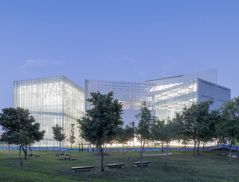
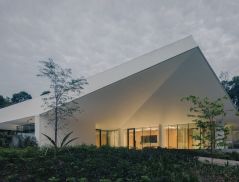
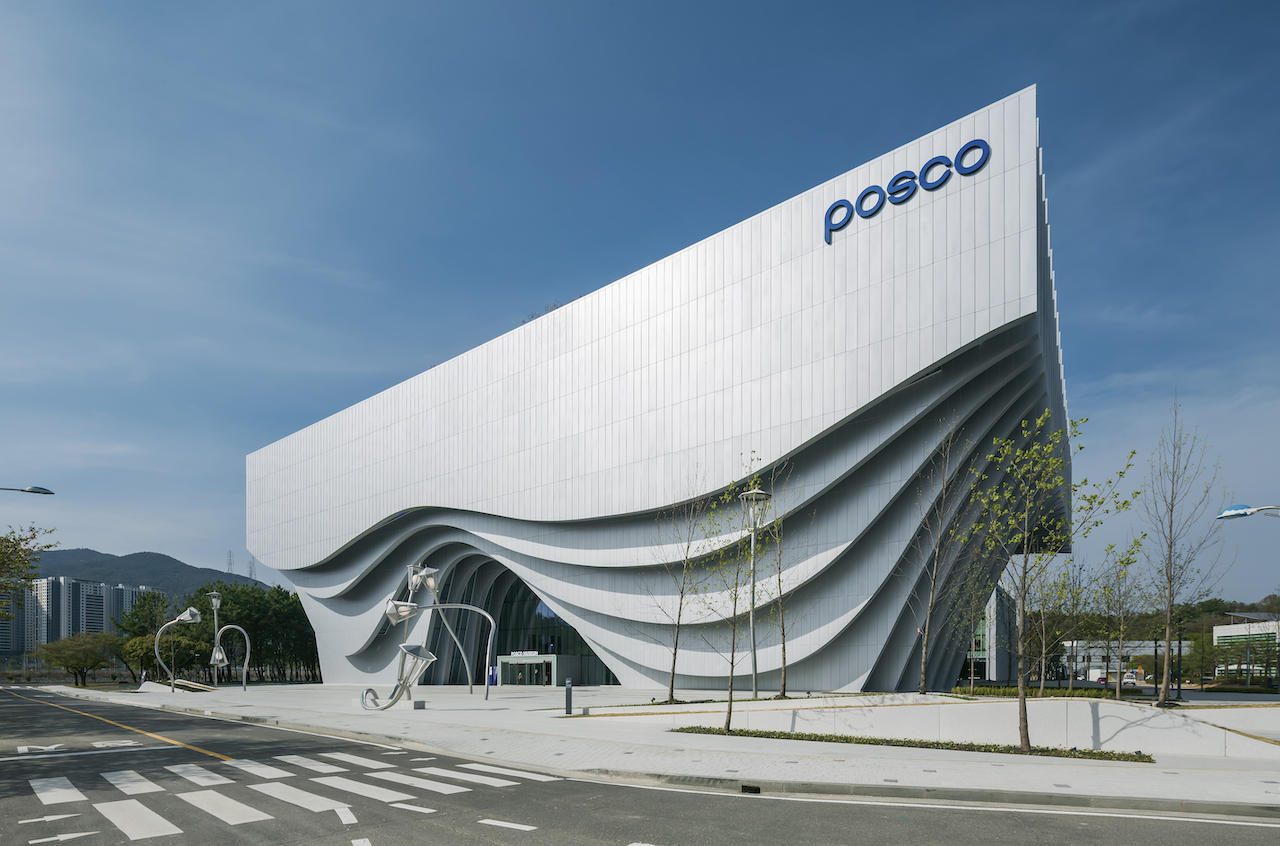
Since completion, the sculptural building with two blocks has emerged as a veritable landmark. The more prominent structure resembles an upside-down landform with a flattened top. Its façade’s contours mirrors the nearby Baegunsan Mountain rising atop the Seomjin River. The building’s architectural parti was inspired by the region’s name. Gwang means ‘light’ and Yang means ‘sunlight’ in the Korean language. Its sinuous forms embody steel’s malleability and density. Physically, it is both still and dynamic – a monolith in volume, but not visually static.
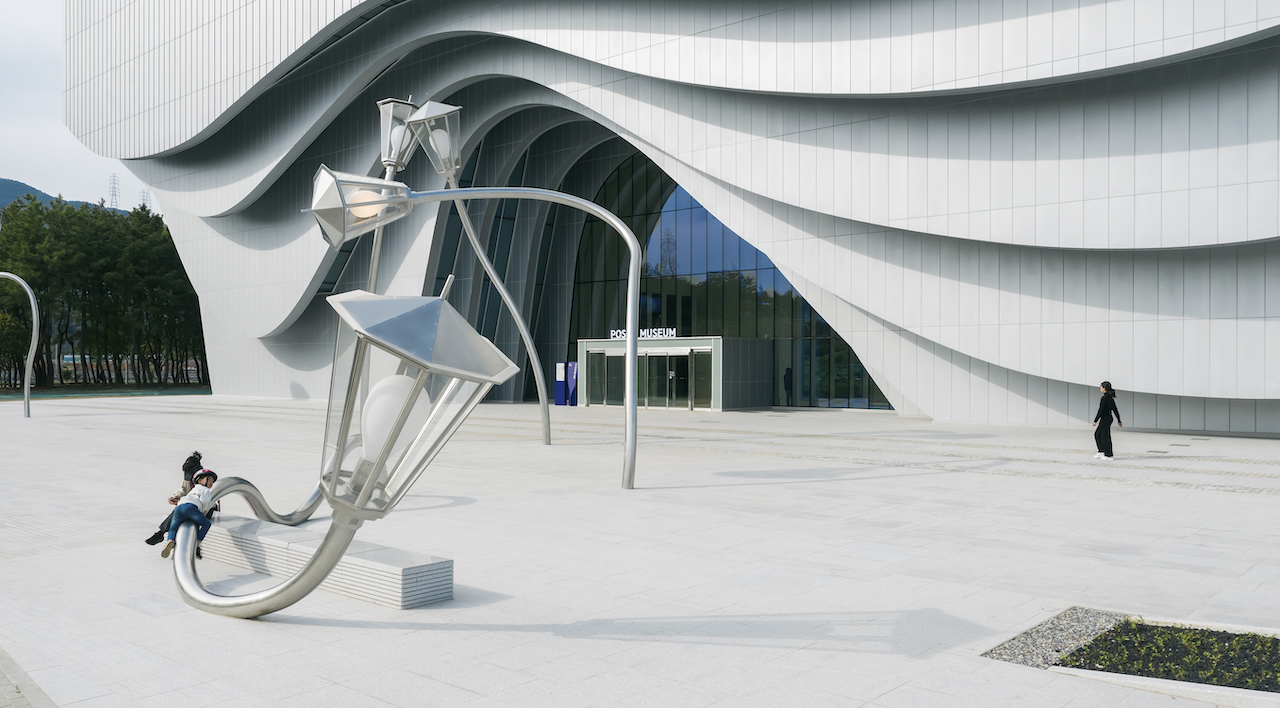 The name Park1538 combines ‘Park’ - a space for people - and 1538 - the melting point of iron in Celcius; the name symbolises the moment right before pure iron is formed into something else, and points to the potential of the facility for the community and art.
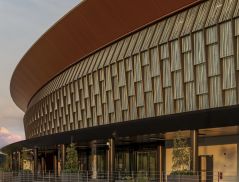
This expression highlights the linked symbolisms between the facility’s creative programmes and steel manufacturing. “Much like iron before it takes shape in a furnace, the architecture of this place reflects a state of potential – unresolved, yet full of tension and possibility,” states the team. The curvaceous block is detailed with a series of ribs functioning as structural frames, with glass panels in between the ribs.
Not surprisingly, this was a complex build. Each rib carries a different curvature and tilt that was adjusted according to the internal programming. 3D stimulation was used early in the planning stage to calibrate the structure, skin and finishes to the form and programme, detailed in tandem with the structural, envelope and finish to conceive a holistic architecture.
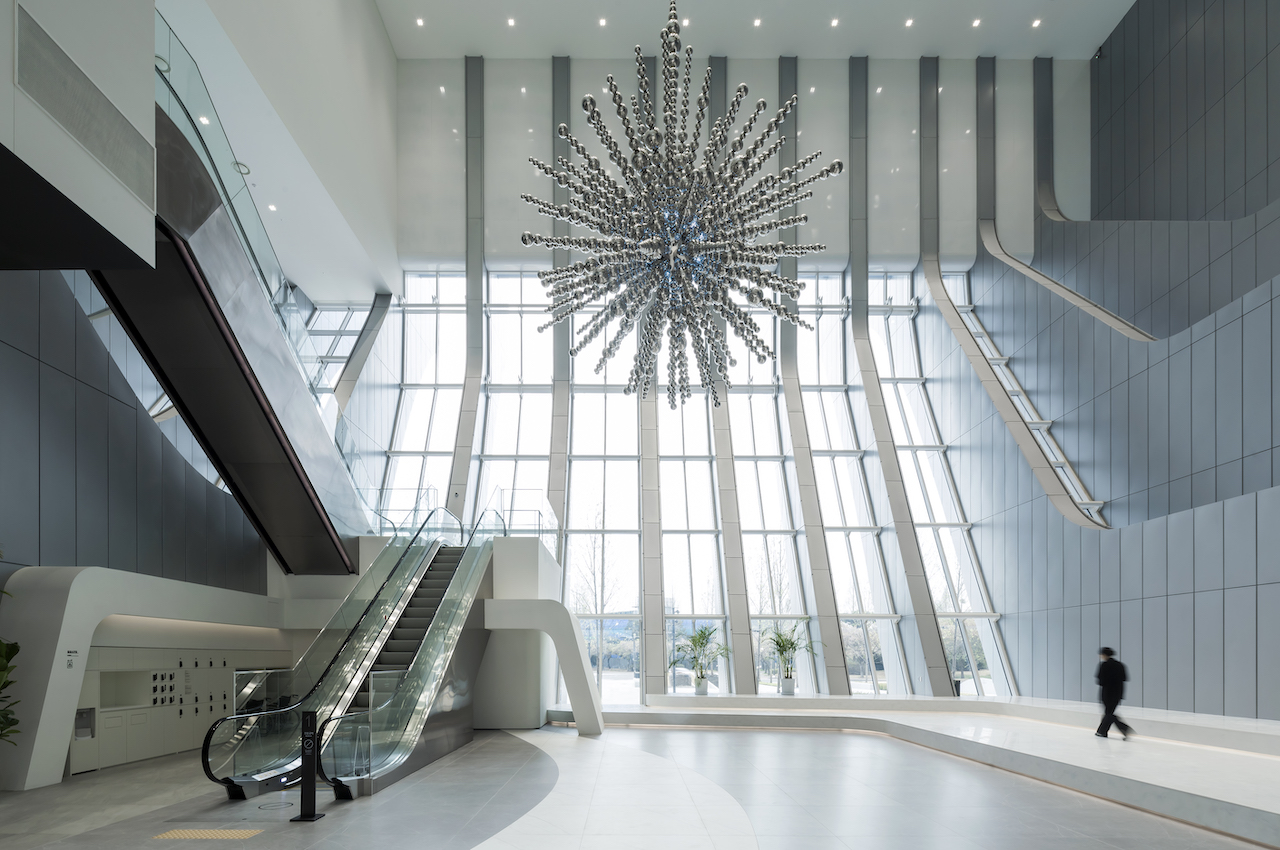
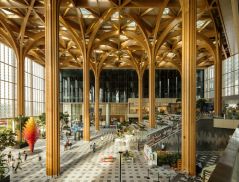
In the front block, one enters into a double-volume lobby distributing the programmes into the POSCO Art Museum Gwangyang on one side and a themed hall on the other. Above the lobby, a cantilevered structure “creates visual tension”, offering visitors “a heightened sensory awareness of gravity and weight.” While this feature is aesthetic, it is also functional, providing an unblocked sightline through the section for views towards the city. Simultaneously, the gesture represents the company’s “closed, production-driven infrastructure to an open, civic space”. This expression of the architecture as a transparent body also showcases it as an edifice for the people and not just corporations.
Cultural regeneration and giving back
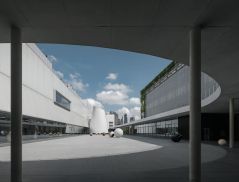
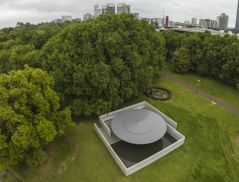
Industry and art convene in other moments, such as a pot sculpture repurposed from a wrecking ball used to crush steel by-products generated during the steelmaking process. It embodies the metamorphosis of “the memory of place into a contemporary landscape,” rising above its industrial origins to become a space for the general public as well as “ part of South Korea’s broader narrative of industrial tourism and cultural regeneration.”
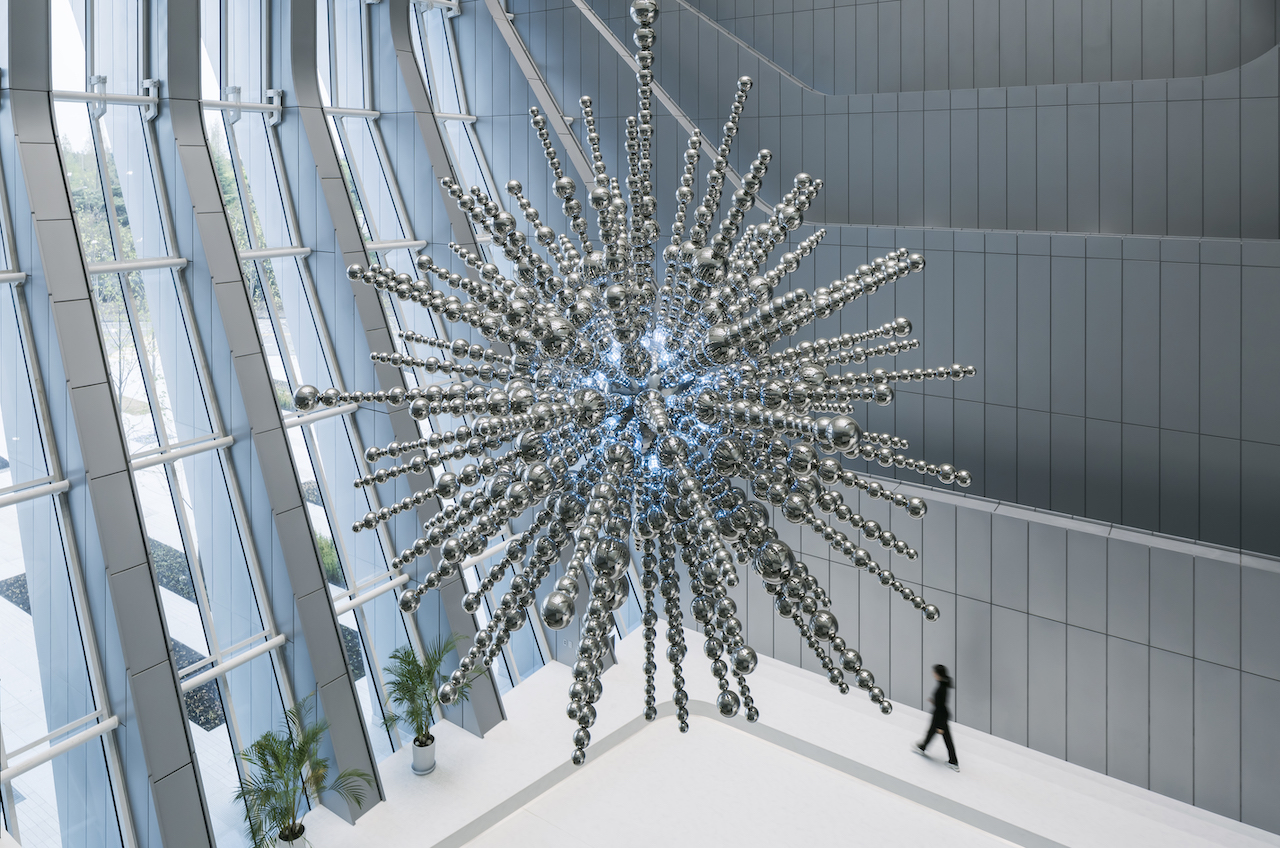 The theme hall right next to the lobby presents a grand celebration of space and light.
Rather than silos, the internal spaces are laid out along a continuous flow to build connection in a passive manner. The rear block contains programmes such as a cafeteria, lecture halls, auditoriums and meeting spaces, encircling a three-storey central atrium that augments sectional porosity. On the third storey, the business lounge and office enjoys views of a garden terrace. The front block also offers panoramic views on the expansive fourth-storey roof garden.
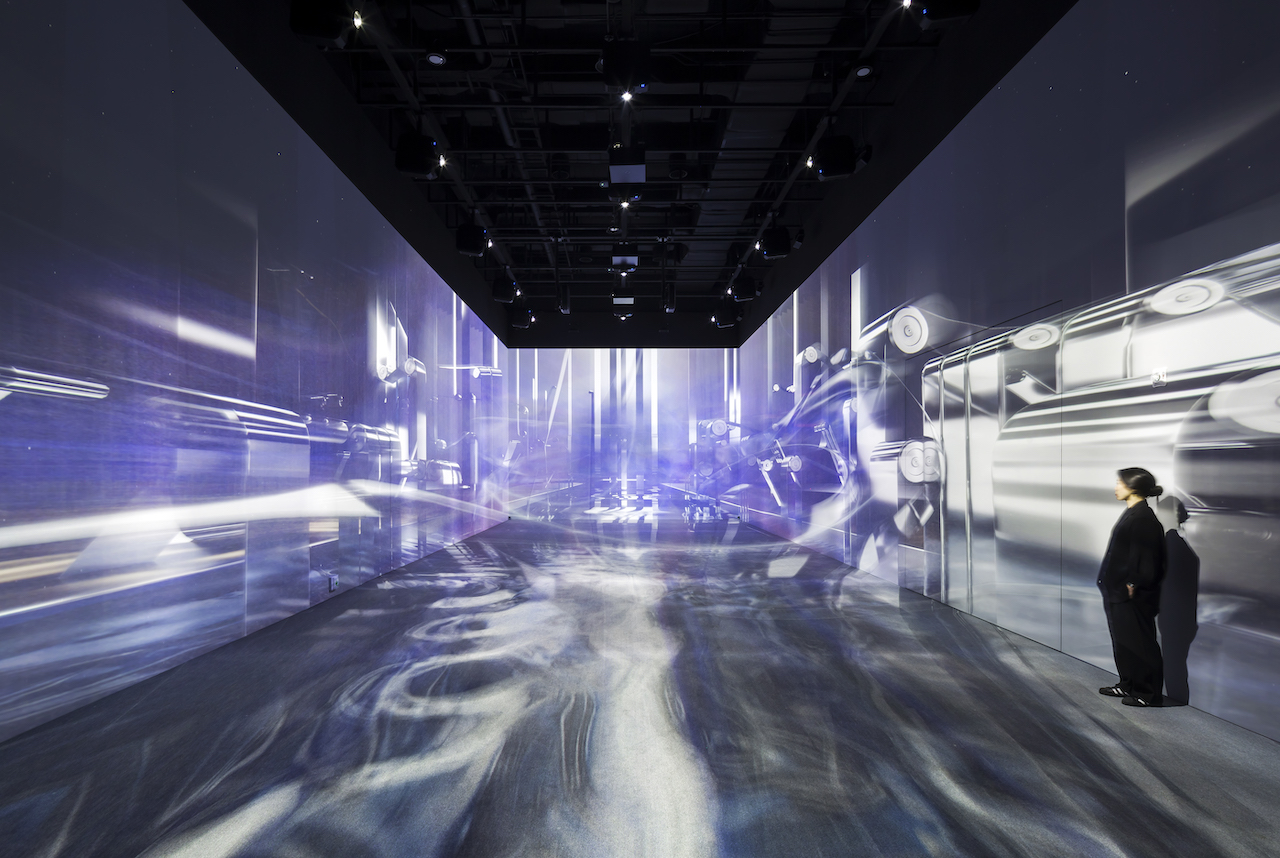 A multi-media presentation of POSCO’s steel-making ambitions and prowess
The visitor demographic is divided into two sets: the local community that can now be proud to own a cultural landmark whose exhibitions, workshops and public programs enrich everyday life in the city “previously dominated by industry”; and for visitors and tourists to satiate their curiosity about “the intersections of steel, culture and place.”
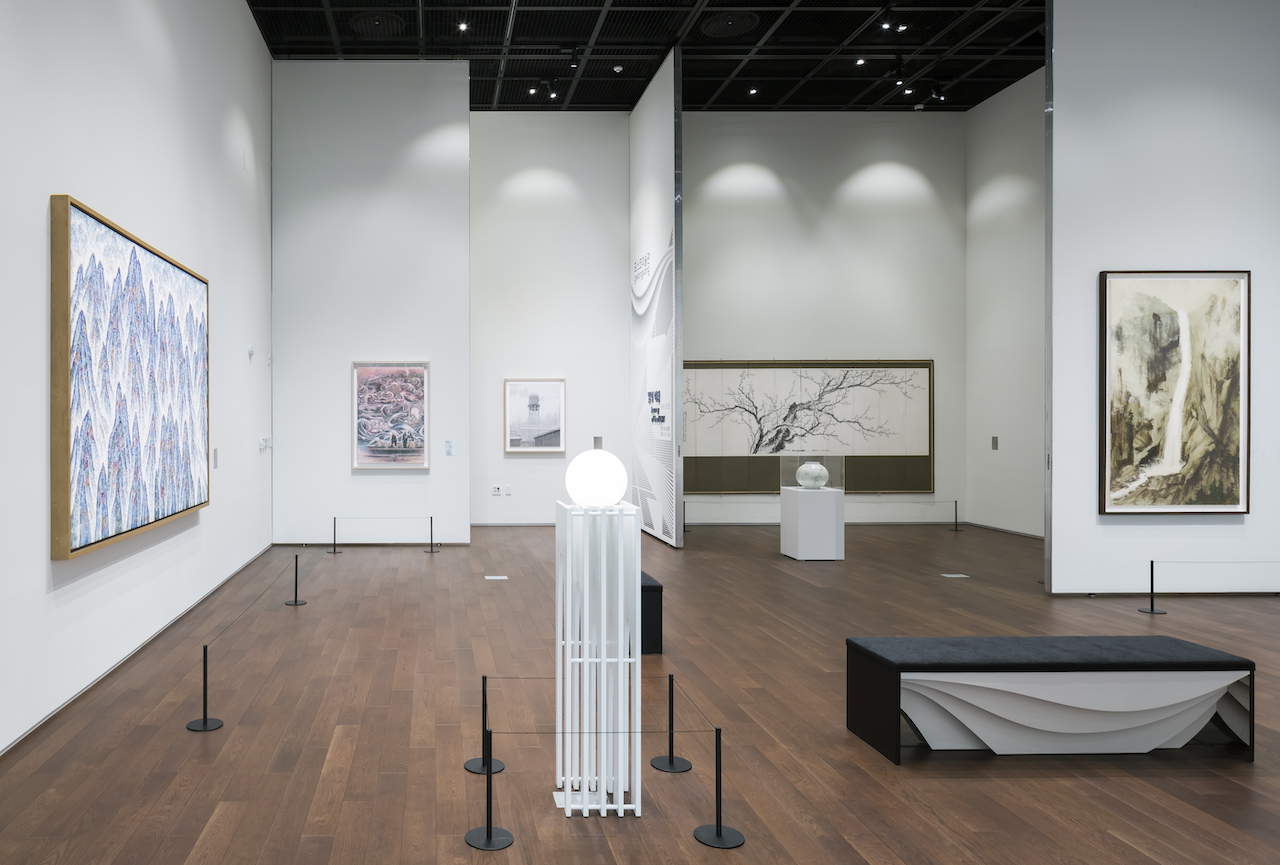 POSCO Art Museum Gwangyang is contained within the building, offering visitors a high-end art experience in the area.
True to its ambitions, a new wave of visitors has come to Gwangyang with the initial aim to visit the Park1538 Gwangyang. Many students have also visited, as the showcase of steelmaking’s history and technology is not so readily available elsewhere, especially in such an immersive environment. For the team, the project gives back to the city of Gwangyang, “converting the legacy of the steel industry into a cultural platform accessible to citizens.”