 Share
Share



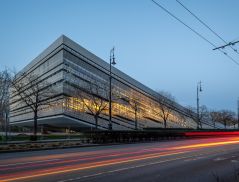
Forty years ago, Singapore Science Park (SSP) was established as a campus-style development in the west of the country to support the growth of the life-science sector. It expanded in phases, and in March 2025, the Geneo life sciences cluster designed by Serie Architects and Multipy Architects was completed. It features five buildings in a tight-knit urban scheme infilled with gardens.
Derived from the blend of the words ‘Gen’ and ‘Neo’ (or new), its name reflects ambitions to nurture the next generation of thinkers, makers, and entrepreneurs across the biomedical, pharmaceutical, and tech fields. The progressive live-work-play model features serviced apartments (through Citadines Science Park Singapore), as well as about 39,000sqft of retail, dining, and wellness facilities. Five buildings are linked by a network of gardens and pathways conceived by Grant Associates, bringing relief to its location along major roads. Contained within them are over 180,600sqm of column-free adaptable spaces, dry- and wet lab-ready facilities with specialised ventilation and low-vibration flooring, coworking labs, and smart-enabled offices.
“How do we design meaningful public spaces suited for the tropics, and how do we embed social spaces in knowledge environments to rejuvenate Singapore Science Park?” were the questions Christopher Lee, the co-founder and principal of Serie Architects pondered with his team when working on the project. The response is a series of humanistic, biophilic, and tactile spaces for daily work and research life, and The Canopy - a lofty event space at 1 Science Park Drive - provides another iteration of this approach.
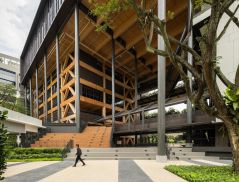
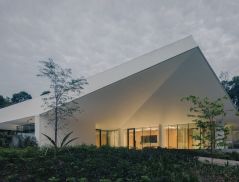
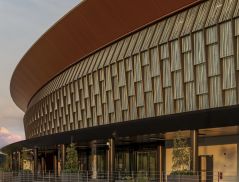
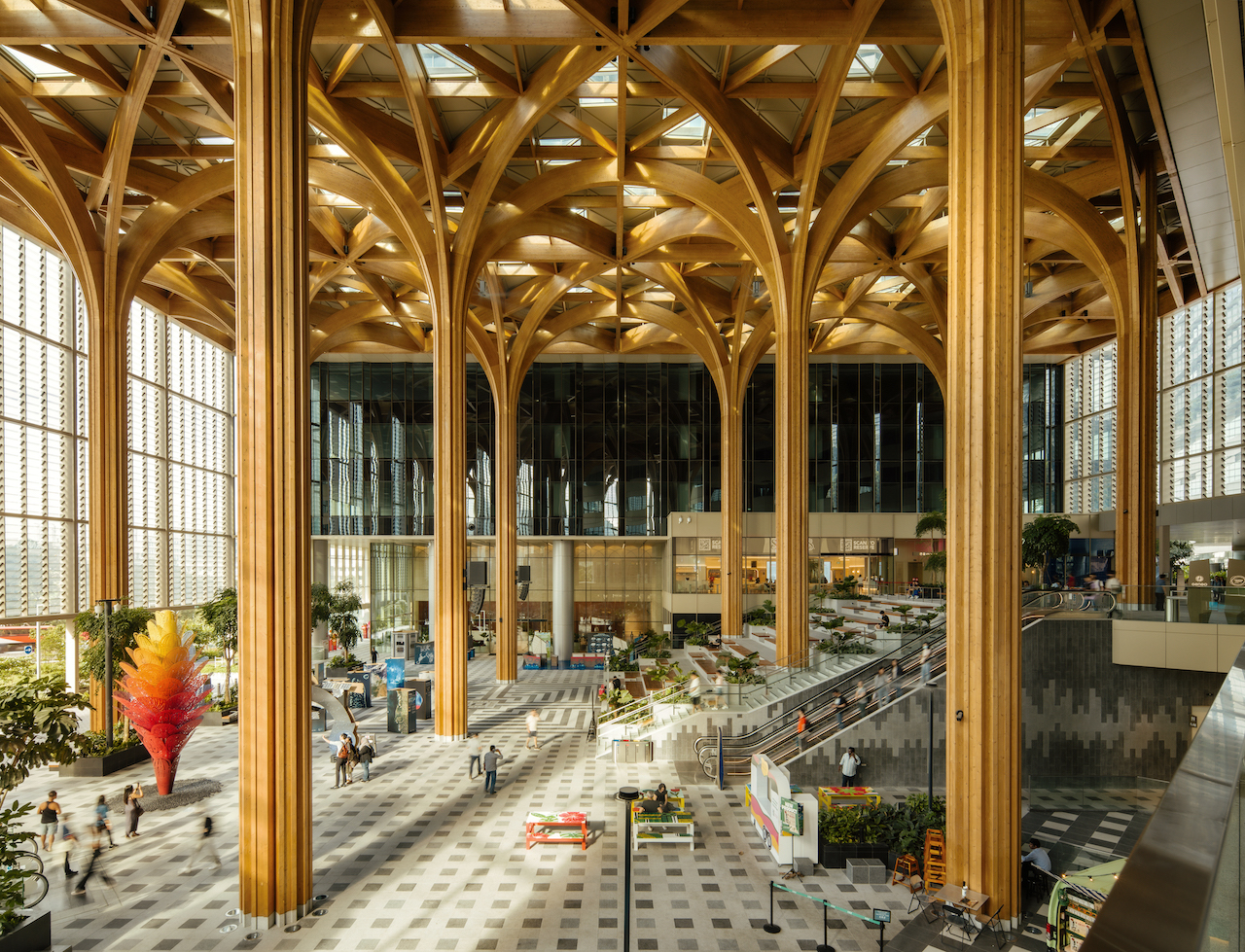
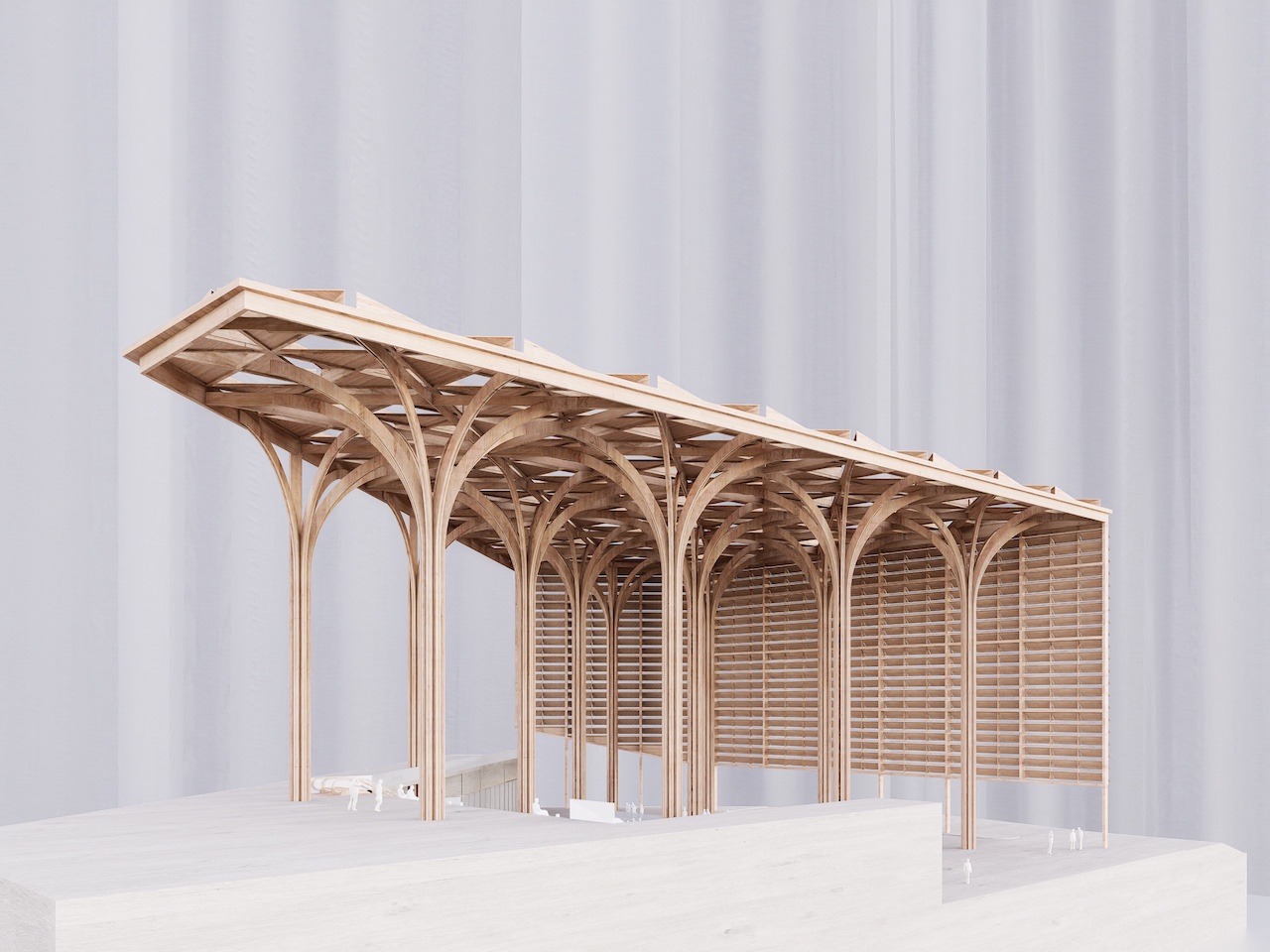
It sits at the edge of the plot, across the road from Kent Ridge MRT (Mass Rapid Transit) Station, which is linked to the building via an underground walkway. Staff and visitors exit the train station into the 3,000-sqm open event plaza of The Canopy, which anchors the development with architectural flair. The striking glass building’s interiors evoke cathedral architecture, with soaring columns flowering at the top into arched profiles. The 27m-tall glulam (glue laminated timber) structures bring tactility and warmth to the space despite their scale. Timber engineering company, Ergodomus, used FEA (Finite Element Analysis) to engineer a strong structure with slim columns. Versowood fabricated the pieces, and Venturer managed the assembly.
Glulam is a structural engineered wood product in which many layers of dimension lumber are bonded together with adhesives. It has seen recent uptake across the world, offering not just a strong and lightweight alternative to traditional structural materials such as steel or concrete, but also a more sustainable option. In Singapore, The Canopy adds to similar precedents, such as Gaia at the Nanyang Technological University in SIngapore by Toyo Ito, which is Asia’s largest timber building.
“The use of Mass Engineered Timber (MET) reduces the embodied carbon of construction drastically because of its carbon sequestration. However, timber structures must be protected from the elements to ensure their structural integrity and materials are not compromised. Hence, we designed the structure to be fully enclosed while allowing natural cross-ventilation and light to fill the space,” explains Lee. The structure, which uses 1,150 sqm of PEFC-certified spruce glulam, emits up to 88 % less carbon than traditional concrete and steel. This dovetails with Geneo’s green achievements of attaining both Green Mark Platinum and Super Low Energy certifications from Singapore’s Building and Construction Authority (BCA).
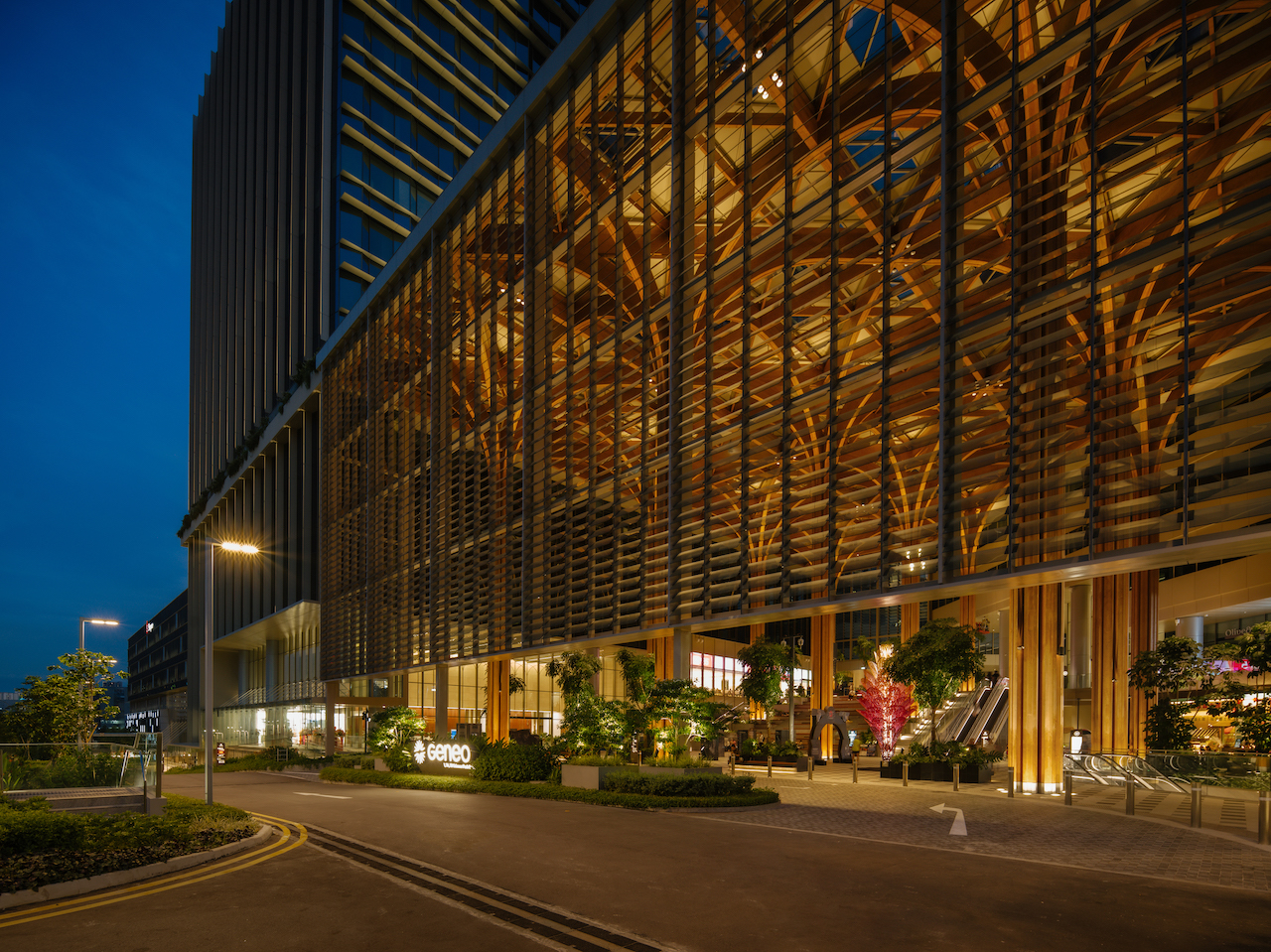
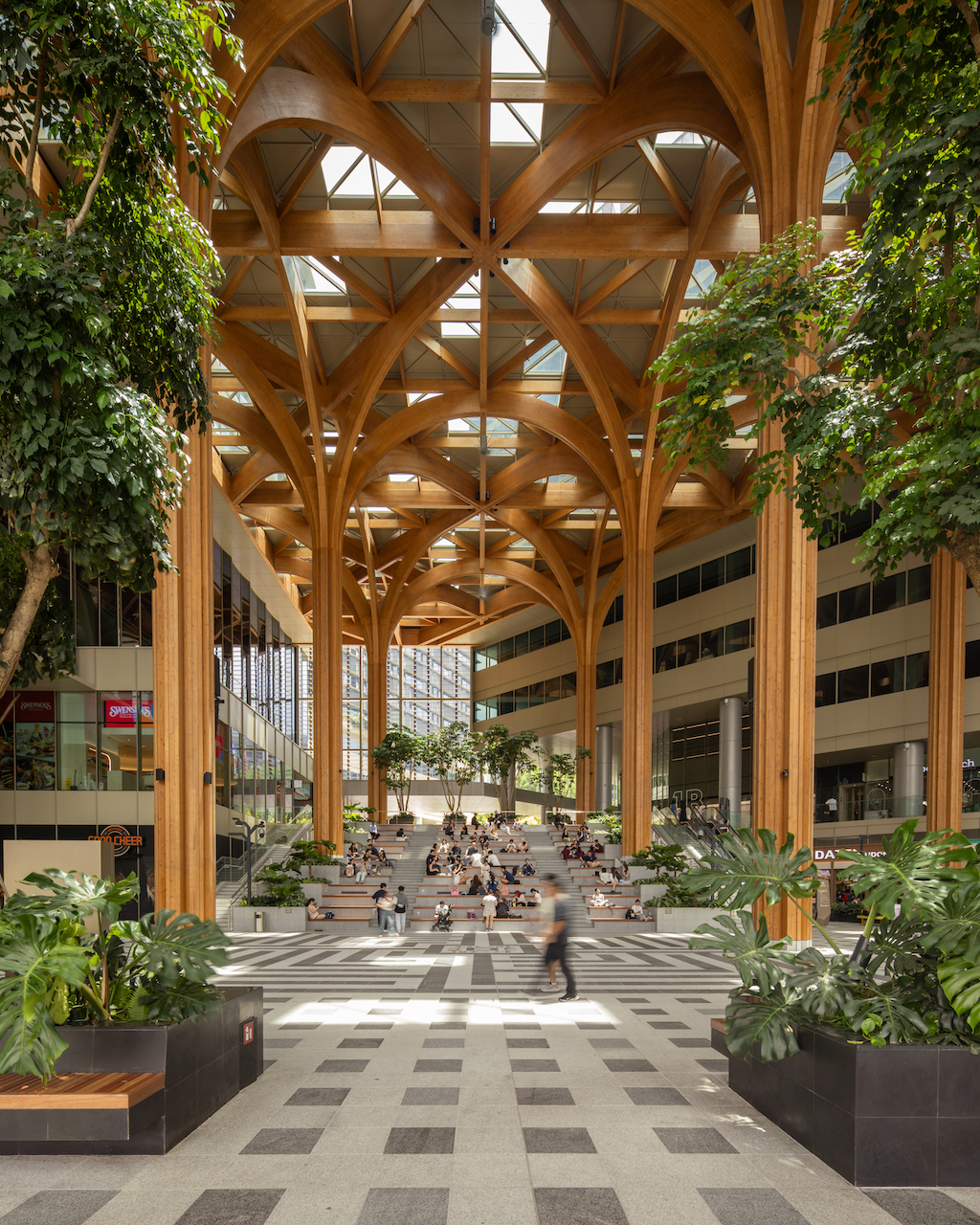
Cafes and restaurants further support the project’s social agenda. The team refers to The Canopy as “a super-sized lobby that can incorporate space for informal social gatherings, and large-scale presentations and events.” In this way, it rethinks the workplace’s social space. “Public space in urban design and architecture is an idea borrowed from the western tradition of city making, which largely originated in temperate climates. The city-room – a shaded, thermally comfortable, naturally ventilated atrium space surrounded by amenities – is one way we can conceive of a public space for the tropics,” Lee expounds.
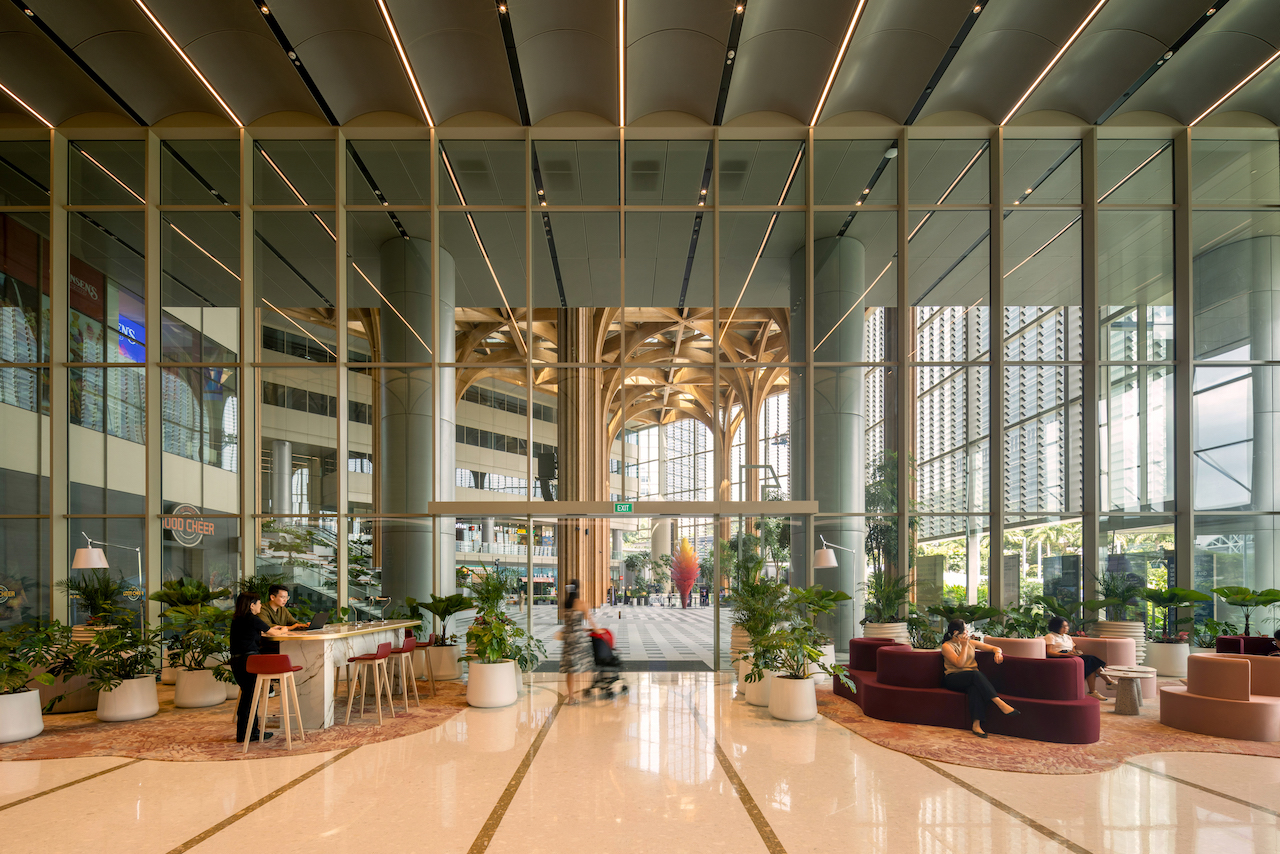
The bountiful daylight that enters is energising yet comfortable, encouraging frequent use. Screened ceiling pattern softens light and glare. Tiered seats integrated into the ground architecture enable adaptable, casual use while evoking a park-like setting, edged by planters that continue the sightline of plants from the outside through the space’s glass elevations.
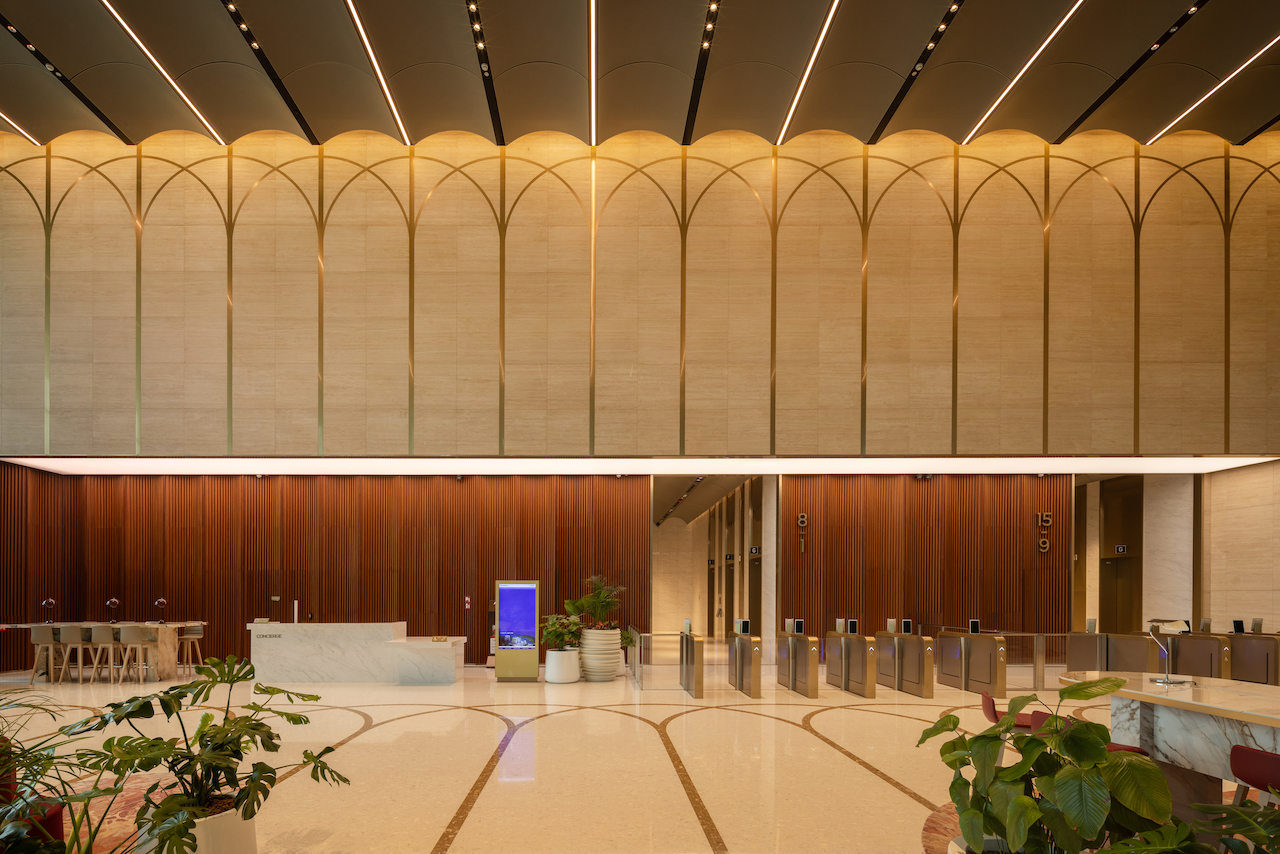
Some users pass briefly beneath under the arches; others linger for events or to take a breather from the office. This, together with the distinctive architecture that assists wayfinding within the large development, has birthed a landmark and place etched in collective memory. In many ways, the space has exceeded the team’s expectations, being used even on weekends – “often the quietest period in workspace environments.” Lee adds, “It successfully provides a true meeting and gathering space for all walks of life.”